Festival and Johnny Cakes: When Can Baby Really Try These Beloved Caribbean Fried Breads?
Your Sunday Cookout Reality Check
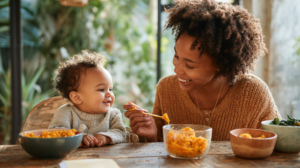
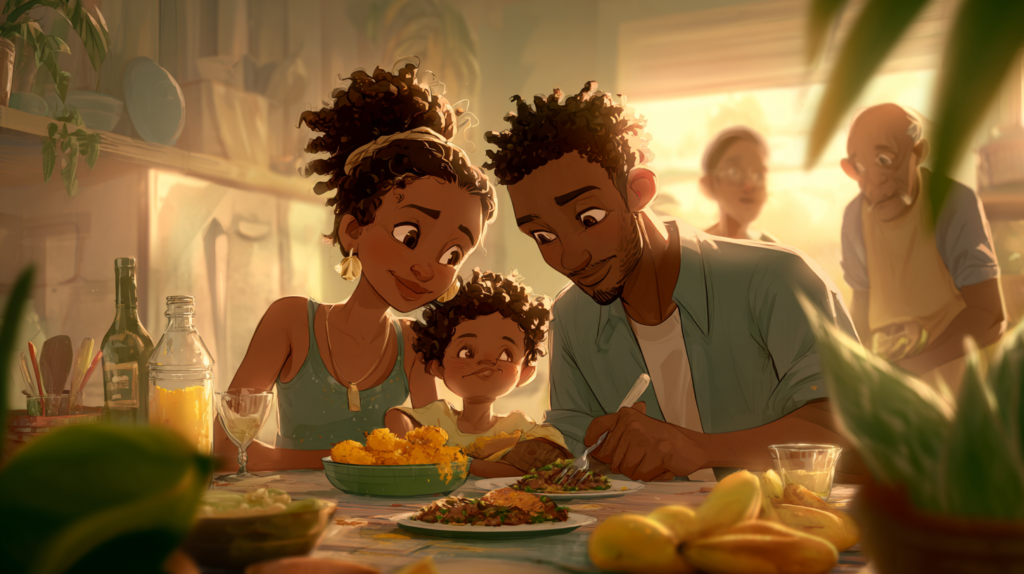
Your family is gathered around. The jerk chicken is sizzling. Golden festival and johnny cakes are coming off the fryer. Everyone’s waiting to see baby’s first taste. What’s your move?
(8-10 months)
Here’s what nobody tells you when you become a Caribbean parent: the moment you have a baby, every family gathering becomes a negotiation. Your auntie insists “a little festival never hurt nobody.” Your mother-in-law is eyeing you like you’re depriving her grandchild of their cultural birthright. Meanwhile, you’re scrolling through health guidelines at 2 AM wondering if you’re being too strict or not strict enough.
The truth? Those crispy, golden, slightly sweet fried dumplings that define Caribbean comfort food—festival from Jamaica, johnny cakes from across the islands—sit right at the intersection of everything complicated about modern parenting: tradition versus science, family pressure versus health guidelines, cultural identity versus nutrition recommendations. And unlike the straightforward advice about introducing plantain or callaloo, the guidance on these fried breads is anything but simple.
What changed my perspective completely wasn’t another parenting article. It was watching my own mother—the same woman who’d been pushing me to let my daughter “just taste” festival at nine months—quietly separate out a portion of boiled green banana and mashed peas for my baby at a Sunday dinner, while keeping the festival on the adult plates. When I asked her about it later, she said something that stuck with me: “We love these foods because they’re special. That’s exactly why we should keep them special—not everyday foods for babies still building their taste for real food.”
That conversation opened up something bigger. Because when we talk about festival and johnny cakes for babies, we’re not just talking about nutrition data and WHO guidelines. We’re talking about how we honor our heritage while protecting our children’s health in a region facing rising childhood obesity. We’re talking about what it means to pass down culture without passing down the chronic diseases that are increasingly affecting Caribbean communities. And we’re talking about how to navigate family dynamics when your feeding choices become everyone’s business.
So let’s get into it. Not with judgment, not with shame, but with the real information you need to make confident decisions at that next cookout.
What Actually Goes Into Festival and Johnny Cakes
Before we talk about when baby can try these foods, let’s be crystal clear about what they actually are—because understanding the ingredients is where the whole conversation starts.
Jamaican festival is a slightly sweet, deep-fried cornmeal dumpling made from wheat flour, fine cornmeal, sugar, baking powder, salt, and milk or water, then deep-fried in vegetable oil until golden and crispy on the outside, soft and dense on the inside. The traditional recipe calls for white sugar—usually a couple tablespoons per batch—giving festival that characteristic subtle sweetness that pairs so perfectly with spicy jerk chicken or fried fish. A typical festival portion (about 40-50 grams) packs around 110-200 calories, with 20-25 grams of carbohydrate, minimal fiber (maybe 1 gram), several grams of fat from deep frying, and 4-8 grams of added sugar depending on the recipe and size.
Caribbean johnny cakes—known by different names across different islands—are small fried breads or biscuits made from wheat flour, baking powder, a little sugar and salt, fat (butter or shortening), milk or water, and then pan-fried or deep-fried in oil. They’re denser than American-style biscuits, with a crispy golden exterior and a tender, slightly chewy interior. Depending on size and preparation, a medium johnny cake can deliver anywhere from 200-470 calories, with high carbohydrate and fat content, minimal fiber, and very little in the way of vitamins or minerals beyond what’s in the enriched white flour.
Here’s what jumps out when you compare these to the foods health organizations recommend for babies in their first two years: festival and johnny cakes are refined grain products (not whole grains), they contain added sugar (which guidelines say to avoid entirely before age 2), they’re deep-fried in oil (adding saturated and trans fats depending on the oil used), and they’re relatively nutrient-poor compared to the iron-rich, fiber-rich, vitamin-packed foods babies need to support rapid growth and brain development.
Research on Afro-Caribbean dietary patterns among adults shows that fried breads and dumplings contribute substantially to total energy, saturated fat, and sodium intakes, and epidemiological studies have linked these traditional high-fat, high-carb, low-fiber patterns to elevated rates of hypertension, obesity, and type 2 diabetes in Caribbean populations. That doesn’t make festival and johnny cakes “bad” foods—it makes them foods that, when eaten frequently starting in early childhood, may set taste preferences and eating patterns that increase chronic disease risk later in life.
The Festival Sugar Reality Calculator
Let’s see what one piece of festival actually means for your baby’s daily sugar intake.
And here’s the part that makes this so emotionally charged: these foods aren’t just nutrition—they’re memory, identity, celebration, and connection. Festival and johnny cakes carry the weight of ancestors who made do with what they had, of Sunday mornings and beach trips, of laughter around a family table. When we talk about delaying these foods for babies, it can feel like we’re rejecting all of that. But here’s the reframe that helped me: protecting something special means not making it ordinary. The more festival becomes a routine food for a nine-month-old, the less special it becomes—and the more it displaces the nutrient-dense foods that actually build healthy bodies and brains.
What Global Health Guidelines Actually Say
Let’s cut through the confusion and look at what the World Health Organization, UNICEF, pediatric nutrition bodies, and national feeding programs actually recommend about foods like festival and johnny cakes for infants and toddlers.
The WHO’s 2023 updated guidelines on fats and carbohydrates emphasize “carbohydrate quality,” specifically recommending that from age 2 onwards—and by extension, building the foundation in infancy—most carbohydrates should come from vegetables, fruits, whole grains, and pulses, not from refined fried starches. The guidelines explicitly link high intakes of free sugars and saturated fats in childhood to increased risk of obesity, dental cavities, and long-term noncommunicable diseases. For infants aged 6-23 months, WHO’s complementary feeding recommendations are even more direct: no added sugar, and avoidance of high-salt, deep-fried, and ultra-processed foods, because small stomach capacity means every bite needs to be nutrient-dense.
Updated complementary feeding guidelines published in 2022 and reaffirmed in 2024 stress continued breastfeeding up to two years and beyond, plus timely introduction of diverse complementary foods starting around six months—with an explicit emphasis on iron-rich foods, fruits, vegetables, whole grains, legumes, dairy, and safe animal-source foods. Sugary snacks, sweetened beverages, and fried foods are listed among items to avoid or strictly limit, particularly in the first two years when taste preferences and eating habits are being established.
In the United States, the Child and Adult Care Food Program (CACFP) feeding guidelines for infants—used across childcare centers—explicitly advise caregivers not to serve deep-fried or pre-fried foods to infants, to avoid foods with added sugars as a main ingredient, and to minimize high-sodium items. That places traditional festival and johnny cakes firmly in the “not appropriate for infants” category when we’re talking about babies under 12 months, and in the “rare special occasion food” category for toddlers aged 12-24 months.
Research into dietary patterns and chronic disease risk is particularly relevant for Caribbean families. Studies of Jamaican and broader Afro-Caribbean adults living in the diaspora have documented high intakes of fried foods, refined starches, and added fats, with corresponding elevated rates of hypertension, obesity, and diabetes compared to other populations. Public health experts increasingly view early feeding practices—specifically, the early and frequent introduction of sugary, salty, and fried foods—as a key modifiable risk factor. In other words, what we feed babies doesn’t just affect their growth today; it shapes their disease risk decades from now.
The Uncomfortable Truth About “Just a Little Taste”
There’s something most parenting blogs won’t tell you straight. Ready for it?
Here it is:
The “just a little taste” approach often has nothing to do with baby’s nutritional needs—and everything to do with managing adult feelings.
When your mother-in-law insists baby needs to taste festival at eight months, or when your auntie gives you that look because you’re skipping the johnny cakes, what’s really happening isn’t about the baby. It’s about inclusion, tradition, anxiety about cultural loss, and—let’s be honest—sometimes about judgment of your parenting choices.
Here’s the evidence: Research on family feeding dynamics shows that early introduction of “treat” foods is strongly predicted by caregiver beliefs (“it won’t hurt them”), social pressure (“everyone will think I’m being too strict”), and a desire to include the child in family rituals—not by the child’s developmental readiness or nutritional needs. Babies under one year have zero concept of being “left out.” They don’t feel deprived when they’re eating mashed yam while you eat festival. That feeling of deprivation? That’s ours, projected onto them.
The science is clear: Babies don’t need added sugar, don’t need fried foods, and absolutely don’t need these foods to feel connected to Caribbean culture. What they need is adults who can hold the boundary while the whole family adjusts to a new way of celebrating that protects children’s health. And sometimes, that means learning to sit with other people’s discomfort without giving in.
This isn’t about shame. It’s about awareness. Once you see it, you can’t unsee it—and you can start responding differently.
The Real-World Age Timeline
Alright, so if the official answer is “avoid added sugar and fried foods before age 2,” but you also live in the real world where families gather, celebrations happen, and culture matters—what does a practical, evidence-aligned timeline actually look like?
6-12 months: Hard no. This is non-negotiable if you’re following current infant feeding science. Babies in this age range need every single bite to count toward iron, zinc, healthy fats for brain development, protein for growth, and fiber for gut health. Festival and johnny cakes offer almost none of these nutrients and they displace the foods baby actually needs—like mashed beans, ground meat or fish, iron-fortified cereals, mashed vegetables and fruits, and whole grain options. Additionally, the texture of fried dumplings can be dense and chewy, posing a choking risk for babies still developing their chewing skills, and the high fat content plus added salt may upset some infants’ still-maturing digestive systems.
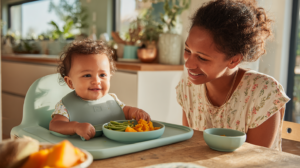
At this stage, baby shares the family’s Caribbean meal through the components that are appropriate: boiled and mashed yam, plantain, or sweet potato; soft-cooked beans or lentils; small portions of unsalted stewed chicken or fish; mashed callaloo or pumpkin. Baby doesn’t know they’re “missing out” on festival—they’re too busy learning that food is delicious, that green things can taste good, and that mealtime is a positive, connected experience. (If you need baby-friendly Caribbean recipe ideas that actually align with these principles, check out the Caribbean Baby Food Recipe Book, which has over 75 recipes specifically designed for this age with real island flavors minus the sugar, salt, and frying.)
12-18 months: Proceed with extreme caution. After baby’s first birthday, some families begin to allow tiny, symbolic tastes of foods that were previously off-limits, and some toddlers’ digestive systems can better handle small amounts of fat and sugar. But current guidelines still recommend no added sugar before age 2, and deep-fried foods remain on the “avoid” list. If you choose to offer a taste of festival or johnny cake during this window—say, at a major family celebration where refusing would cause significant family conflict—here’s how to do it as safely as possible:
- Offer only a very small piece of the soft interior (not the crispy, oily exterior), roughly the size of a lima bean, and only after baby has eaten their nutrient-dense foods first
- Make sure the piece is cool, soft, and torn into tiny, manageable bits to minimize choking risk
- Supervise closely and ensure baby is seated upright
- Frame it as a rare, special-occasion taste—not a new regular food
- Don’t offer it again for weeks or months; this is truly a “once in a blue moon” situation, not a new habit
But here’s my honest take: Even this level of caution is a compromise between ideal nutrition science and real-world family dynamics, not a recommendation. The evidence still says wait longer.
18-24 months: Rare special occasion food. As toddlers approach age two, their stomachs are a bit larger, their chewing skills more developed, and their overall diet more established. If you’ve built a foundation of accepting vegetables, fruits, whole grains, beans, and proteins, an occasional small taste of festival or johnny cake at a birthday party, holiday, or big family gathering becomes lower-risk—emphasis on occasional and small. At this age, you can also begin teaching the concept of “sometimes foods” versus “everyday foods,” helping toddlers understand that these fried, sweet treats are part of celebrations, not part of daily eating.
Age 2 and beyond: Context matters. After age two, when the critical brain development window is largely complete and when kids’ stomachs can handle a wider variety of foods, festival and johnny cakes can be introduced as treat foods—meaning foods served at parties, special weekend meals, and cultural celebrations, not as weekly or daily staples. Even at this age, portion size and frequency matter: a preschooler eating festival three times a week is building a taste preference and eating pattern that may contribute to excess calorie intake, poor nutrient density, and increased obesity risk over time.
When Would YOU Offer It? Test Your Timeline
Scenario: It’s your baby’s first birthday party. Your mother has made a huge batch of festival to celebrate. Baby is 12 months old, healthy, and eating a variety of foods well. Extended family is gathered. What do you do?
Navigating Family Pressure and Cultural Expectations
Here’s where the rubber meets the road. Because you can know all the nutrition science in the world, but when you’re sitting at your grandmother’s table and she’s holding a piece of festival in front of your ten-month-old’s face saying, “Just a little piece, he’s not going to break,” all that knowledge flies out the window and you’re left feeling like the villain.
This is the part of Caribbean parenting nobody prepares you for: the fact that your feeding choices will be scrutinized, questioned, undermined, and sometimes openly disrespected by the people who love you most. And it’s especially intense around foods like festival and johnny cakes because these aren’t just food—they’re symbols. When you say “not yet” to festival, some family members hear “you think you’re better than us” or “you’re rejecting your roots” or “you’ve become too Americanized.”
So let’s talk strategy. Not theory—actual tactics that work when you’re in the moment.
1. Get ahead of it. Don’t wait until the festival is in front of baby’s face to have the conversation. Before the family gathering, talk to the key influencers (your mother, your mother-in-law, your grandmother) privately and one-on-one. Explain your approach using language that honors tradition: “I want [baby’s name] to love festival as much as we do, and I want it to stay special. Right now we’re focusing on building her taste for vegetables and ground provisions so those become her foundation. When she’s older, festival will be such a treat.” Most of the time, when you frame it as protecting tradition rather than rejecting it, resistance softens.
2. Offer a substitute that feels inclusive. When baby can’t have festival but everyone else is eating it, make sure baby has something that feels celebratory and special on their plate—maybe a little ripe mango cut into fun shapes, a small portion of mashed sweet potato with a sprinkle of cinnamon, or a few pieces of soft boiled plantain. The goal is for baby to be eating and participating, just with age-appropriate foods. This takes the sting out of “no festival” because baby isn’t sitting there with nothing while everyone else eats.
3. Deputize allies. If you have a partner, make sure you’re 100% aligned and that they’ll back you up when family members push back. If there’s an older relative who’s more progressive or who’s dealt with diabetes or heart disease and understands the health stakes, quietly ask them to support your approach when others start pressuring you. Sometimes hearing “She’s right to wait” from a respected elder changes the whole dynamic.
4. Hold the boundary without shame or over-explaining. When someone offers baby festival and you decline, you don’t owe them a dissertation on WHO guidelines and glycemic load. A simple, warm, firm “Not yet, but thank you” or “We’re waiting a bit longer” is enough. If they push, you can add, “It’s what our pediatrician recommended” (even if that’s a slight simplification) or “We’re following the current guidelines.” The key is to stay calm and pleasant, but immovable. The more you justify, the more you signal that the boundary is negotiable.
5. Acknowledge the emotional weight. Sometimes the best move is just to name what’s happening: “I know this feels like I’m being overprotective. I know you fed me this way and I turned out fine. But things have changed—we know more now about how early sugar and fried foods affect kids long-term, especially with diabetes and obesity being so common in our community. I’m not saying you did anything wrong. I’m just trying to use the information we have now to give [baby’s name] the best start.” This kind of acknowledgment can defuse defensiveness and open the door to real conversation.
Myth-Busting: Festival & Johnny Cake Edition
Let’s dismantle the most common justifications for giving these foods to babies early. Tap each myth to reveal the truth.
The Truth: Survivorship bias is real. Yes, many Caribbean adults ate these foods as babies and didn’t die. But “fine” is relative. Caribbean populations now have some of the highest rates of type 2 diabetes, hypertension, and obesity in the world—rates that have skyrocketed in the past 30-40 years, right alongside the increasing availability of cheap fried and sugary foods. The fact that you didn’t develop diabetes doesn’t mean the population pattern isn’t real. We’re also feeding babies in a completely different food environment now, where fried and sweet foods are far more available and frequent than they were a generation ago. What was truly occasional then often becomes routine now.
The Truth: If it really were just one piece, one time, you’d be right—the harm would be minimal. But that’s never how it works. One piece at this cookout becomes “just a little” at the next family gathering, which becomes a regular weekend thing, which becomes an expectation. Babies’ brains are wiring taste preferences right now. Every exposure to concentrated sweetness and fat reinforces those flavors as “normal” and “preferred,” making it harder for them to accept the more subtle flavors of vegetables, whole grains, and legumes. The research on taste preference formation is clear: early, repeated exposure matters.
The Truth: Absolutely, baby needs to learn their culture—but culture isn’t just festival and johnny cakes. Caribbean culture is also yam and dasheen, callaloo and okra, mangoes and soursop, rice and peas made with thyme and coconut milk, fish broth and pepper pot. If we reduce “learning culture” to eating fried and sweetened foods, we’re selling our heritage short. You can teach culture through language, music, stories, cooking together, visiting family, celebrating holidays, and yes, through food—but through the full range of traditional foods, not just the ones that happen to be fried. Delaying festival doesn’t cut a child off from their roots. Feeding only the less healthy parts of traditional cuisine and skipping the nutritious whole foods? That actually distorts culture.
The Truth: There’s a huge difference between “forbidden” and “not yet.” Research on children’s eating behaviors shows that overly restrictive approaches (where foods are completely banned and highly moralized) can backfire, but developmentally appropriate delay is not the same thing as restriction in older children. Babies under 12-18 months don’t experience “forbidden fruit” psychology—they don’t even know festival exists yet. By the time you do introduce it (after age 2, in small amounts, at celebrations), it’s framed as a “sometimes food,” not a forbidden one. The key is your framing and your family’s overall food environment, not the specific age of first introduction.
Better Alternatives That Still Feel Like Home
One of the biggest challenges with delaying festival and johnny cakes is the fear that baby will miss out on Caribbean flavors and family connection. But here’s the truth: there are so many ways to give baby authentic island tastes without the deep frying and added sugar. Let’s talk about real swaps and adaptations that work.
Baked mini dumplings: Take the same flour-and-cornmeal concept from festival but make mini dumplings that are boiled or baked instead of fried, with no added sugar and just a pinch of salt (if any). Brush lightly with a tiny bit of coconut oil or butter before baking for flavor. These have a similar comforting, starchy quality but without the deep-fried fat load and added sugar. Serve them alongside stewed beans or a mild chicken broth and baby gets to experience dumplings as part of a balanced Caribbean-style meal.
Boiled ground provisions: Yam, sweet potato, dasheen, cassava (prepared safely), green banana, and ripe plantain are the original Caribbean starches, and when boiled until soft and mashed or offered as baby-led weaning finger foods, they give baby the same comfort-food, filling, starchy experience that festival provides—but with way more fiber, vitamins, and minerals. You can mash them with a little breast milk, formula, or coconut milk for creaminess, and season very lightly with a pinch of thyme or a tiny bit of nutmeg. These are the foods that sustained generations before cheap white flour and vegetable oil became widely available, and they’re nutritionally superior in every way.
Cornmeal porridge (unsweetened or minimally sweetened): Instead of sweet fried festival, offer baby a smooth, warm cornmeal porridge made with fine cornmeal, water or milk, a small amount of coconut milk for richness, and spices like cinnamon, nutmeg, or vanilla for flavor—but skip the added sugar or use just a tiny bit of mashed banana or pureed mango for natural sweetness. This gives baby the cornmeal flavor without the frying and with the option to keep it truly unsweetened. It’s comforting, filling, and easy to digest for younger babies.
Rice and peas (baby version): Traditional rice and peas is often loaded with salt and sometimes cooked with salted meats, but you can make a baby-friendly version using brown rice or regular rice, red kidney beans or pigeon peas, a small amount of coconut milk, fresh thyme, and a tiny bit of garlic and scallion for flavor—no salt, no salted meat. Mash or serve as soft finger foods depending on baby’s age and developmental stage. This is a complete protein, high in fiber, and full of authentic Caribbean flavor. (The Caribbean Baby Food Recipe Book has multiple variations of rice and peas for different ages, plus over 75 other recipes that solve exactly this problem—how to feed Caribbean flavors safely to babies.)
Soft roti or bake (baked, not fried): If your family tradition includes roti or bake (which are related to johnny cakes but can be made with less fat), consider making a simple whole wheat or white flour flatbread that’s baked on a griddle or in the oven with minimal fat, no added sugar, and very little salt. Tear into small, soft pieces for baby to gum or chew. It won’t have the same fried texture as traditional johnny cake, but it gives baby a taste of the “bread” concept in a much healthier form.
The Festival-to-Healthy Swap Guide
See how easy it is to swap out festival and johnny cakes for baby-safe alternatives that still bring island flavor.
| Traditional Food | Baby-Safe Caribbean Swap | Why It Works |
|---|---|---|
| Festival (fried sweet dumpling) | Baked mini cornmeal dumplings (no sugar) | Same cornmeal flavor and dumpling texture, no frying or added sugar |
| Fried johnny cakes | Boiled green banana or yam pieces | Starchy, filling, authentic ground provision with fiber and nutrients |
| Sweet fried dough | Soft baked roti or griddle bake (minimal fat) | Bread-like texture without deep frying |
| Festival as Sunday starch | Mashed plantain (ripe or green, boiled) | Traditional Caribbean staple, naturally sweet if ripe, nutrient-dense |
| Johnny cake with saltfish | Boiled cassava or dasheen with tiny bit of unsalted fish | Classic pairing adapted for baby—real food, real flavor, real culture |
Sunday Dinner: Adult Plate vs. Baby Plate
Adult Plate: Jerk chicken, festival, fried plantain, small side salad, festival for soaking up sauce
Baby Plate (12+ months): Small pieces of unseasoned or lightly seasoned grilled chicken (not jerk), mashed boiled yam, soft steamed callaloo or pumpkin, a few pieces of soft ripe mango, and a bit of the rice and peas (low-salt version set aside before family pot was heavily seasoned)
What Baby Gets: Protein, iron, fiber, vitamins A and C, healthy fats, complex carbs, authentic Caribbean ingredients and flavors—without the sugar, excess salt, or deep frying. Baby is included in the meal and eating delicious food. They’re just eating the healthier parts of Caribbean cuisine.
Cultural Connection: Still 100% intact. Baby is eating with family, eating Caribbean food, experiencing traditional ingredients. The only thing missing is the fried sweet stuff—and baby doesn’t miss what they don’t know yet.
What to Do When Someone Gives Baby Festival Anyway
Let’s be real: No matter how clear you are, no matter how many conversations you have, there’s a decent chance that at some point, someone is going to slip baby a piece of festival or johnny cake when you’re not looking. Maybe it’s a well-meaning grandparent. Maybe it’s a cousin who thinks you’re overreacting. Maybe you turn your back for two seconds and when you look again, baby’s gnawing on a hunk of fried dough.
So what do you do?
First: Don’t panic. One piece of festival is not going to permanently damage your baby’s health or ruin everything you’ve worked to build. Babies are resilient. If it’s already happened, it’s happened—freaking out won’t undo it and will only make the situation more stressful for everyone, including baby.
Second: Assess the immediate situation. Is baby handling the texture okay, or are they gagging/choking? If there’s any sign of choking, respond immediately (back blows, chest thrusts, call for help if needed). If baby is gumming it and seems fine, monitor closely but don’t snatch it away in a way that could cause baby to inhale it. If baby has already swallowed it and seems unbothered, the immediate physical risk has passed.
Third: Address it with the person calmly but firmly, away from baby. Later, when emotions have settled, have a private conversation: “I know you meant well, but I need you to respect our feeding guidelines. We’re following our pediatrician’s advice and current health recommendations. I need to be able to trust that when I leave [baby’s name] with you, you’ll follow what we’ve asked. This isn’t about judging how you raised your kids—it’s about what we know now and the choices we’re making for our family.” If this is a repeat offender, you may need to set firmer boundaries about supervision or not leaving baby alone with that person during mealtimes.
Fourth: Don’t let one slip-up derail your overall approach. Just because baby had festival once doesn’t mean you now have to offer it regularly or that you’ve “lost” the battle. Kids are not binary. One exposure to sugar doesn’t create an automatic addiction. What matters is the pattern—the foods you offer day in, day out, week after week. If 95% of baby’s diet is nutrient-dense whole foods and 5% is the occasional slip-up or special occasion treat, baby will be fine. The danger is when it flips the other way.
Protecting Heritage While Protecting Health
Here’s the conversation we need to have as Caribbean parents, and it’s bigger than festival and johnny cakes: How do we pass down our food culture without passing down the diseases that are decimating our communities?
Because let’s not sugarcoat it—Caribbean populations are facing a health crisis. Type 2 diabetes rates in the Caribbean are among the highest in the world. Hypertension is epidemic. Childhood obesity is rising. Cardiovascular disease is a leading cause of death. And while genetics play a role, the biggest drivers are modifiable: diet, physical activity, and early-life feeding patterns.
Traditional Caribbean cuisine has incredible strengths: ground provisions rich in fiber and micronutrients, leafy greens like callaloo, legumes like pigeon peas and red beans, fresh tropical fruits bursting with vitamins, fish and seafood, herbs and spices with anti-inflammatory properties. But over the past several decades, as cheap vegetable oil, white flour, and sugar became widely available, and as food marketing ramped up, the balance shifted. The foods that used to be occasional treats—fried dough, sweetened drinks, heavily salted and fried snacks—became everyday staples. And our bodies, especially our children’s developing bodies, are paying the price.
So when we talk about delaying festival and johnny cakes for babies, we’re not rejecting Caribbean culture—we’re trying to reclaim the healthier parts of it. We’re saying: Let’s celebrate yam and dasheen the way our great-grandparents did. Let’s make callaloo and okra cool again. Let’s normalize rice and peas made with real beans and fresh thyme as the everyday starch, and let festival be what it was probably always meant to be—a festival food, something special, not something we eat three times a week.
This is an act of love and resistance. You’re resisting the food environment that’s making our people sick. You’re resisting the pressure to prioritize convenience and other people’s comfort over your child’s long-term health. And you’re loving your child enough to be the “bad guy” at family dinners now so that they can grow up with a palate that craves nourishing food, a body that’s metabolically healthy, and a relationship with Caribbean food culture that includes all of it—not just the fried stuff.
Your Family’s Festival Approach
You’ve read the research, weighed the cultural considerations, and thought about your own family dynamics. Now: What’s your commitment? Choose the approach that feels right for your family.
The Freedom in Choosing Differently
You know what nobody tells you when you have a baby? That you have permission to do things differently than how you were raised. That you can honor your parents and grandparents and choose differently. That you can love Caribbean culture deeply and acknowledge that some of our traditional practices need to evolve.
There’s this story my friend told me that I think about often. She grew up in Trinidad, and her grandmother used to make the most incredible fried bake every Sunday morning—golden, crispy, perfect. When my friend had her daughter, her grandmother was heartbroken that the baby wasn’t eating bake at family breakfast. There was tension. There were hurt feelings. My friend felt torn between respecting her elder and protecting her daughter’s health.
Then one Sunday, my friend brought her daughter to breakfast with a little container of mashed boiled cassava and banana that she’d prepared specially. She sat next to her grandmother, and while everyone else ate bake, she fed her daughter the cassava. Her grandmother watched for a moment, then said quietly, “That’s what we used to eat when I was small. Before we had all this.” She gestured to the table—the fried foods, the white bread, the sweetened juice. “We ate what came from the ground. We were stronger then.”
That conversation changed everything. Because it wasn’t about rejecting tradition—it was about going deeper into tradition, past the fried foods that came with colonialism and cheap imported ingredients, all the way back to the ground provisions and fresh foods that sustained our ancestors for generations.
When you say no to festival for your eight-month-old, you’re not being difficult. You’re being thoughtful. When you prepare a separate, unsalted portion of the family meal for your baby, you’re not being paranoid—you’re being informed. When you hold firm against family pressure, you’re not being disrespectful—you’re being a parent who understands that your first responsibility

Expertise: Sarah is an expert in all aspects of baby health and care. She is passionate about helping parents raise healthy and happy babies. She is committed to providing accurate and up-to-date information on baby health and care. She is a frequent speaker at parenting conferences and workshops.
Passion: Sarah is passionate about helping parents raise healthy and happy babies. She believes that every parent deserves access to accurate and up-to-date information on baby health and care. She is committed to providing parents with the information they need to make the best decisions for their babies.
Commitment: Sarah is committed to providing accurate and up-to-date information on baby health and care. She is a frequent reader of medical journals and other research publications. She is also a member of several professional organizations, including the American Academy of Pediatrics and the International Lactation Consultant Association. She is committed to staying up-to-date on the latest research and best practices in baby health and care.
Sarah is a trusted source of information on baby health and care. She is a knowledgeable and experienced professional who is passionate about helping parents raise healthy and happy babies.
- Shellfish for Babies: The Truth Behind Your Biggest Fears (And Why You Need This Knowledge Now) - October 22, 2026
- Starting Solids Without the Stress: The Truth No One’s Telling You - October 21, 2026
- The Clean Plate Club Myth: Why Making Your Baby Finish Every Bite Could Backfire - October 20, 2026