
Co-Parenting Across Households: How to Keep Feeding Your Child Consistent (Even When Life Isn’t)
For separated & divorced parents
One of the most heartbreaking things a parent told me after her divorce was this: “My son doesn’t cry when he leaves my house… he cries when I ask what he ate at the other house.”
If you’re co-parenting across two households, you already know this: food is never just food. It’s bedtime battles disguised as dessert debates, old resentments hiding under what’s packed in the lunchbox, and “Who really cares more?” camouflaged as “He eats too much junk over there.”
The good news? You do not need identical rules in both homes to protect your child’s health and happiness. What your child needs most is something much more powerful (and much more achievable): predictable routines, low-drama mealtimes, and adults who act like a team—even if they’re no longer a couple.
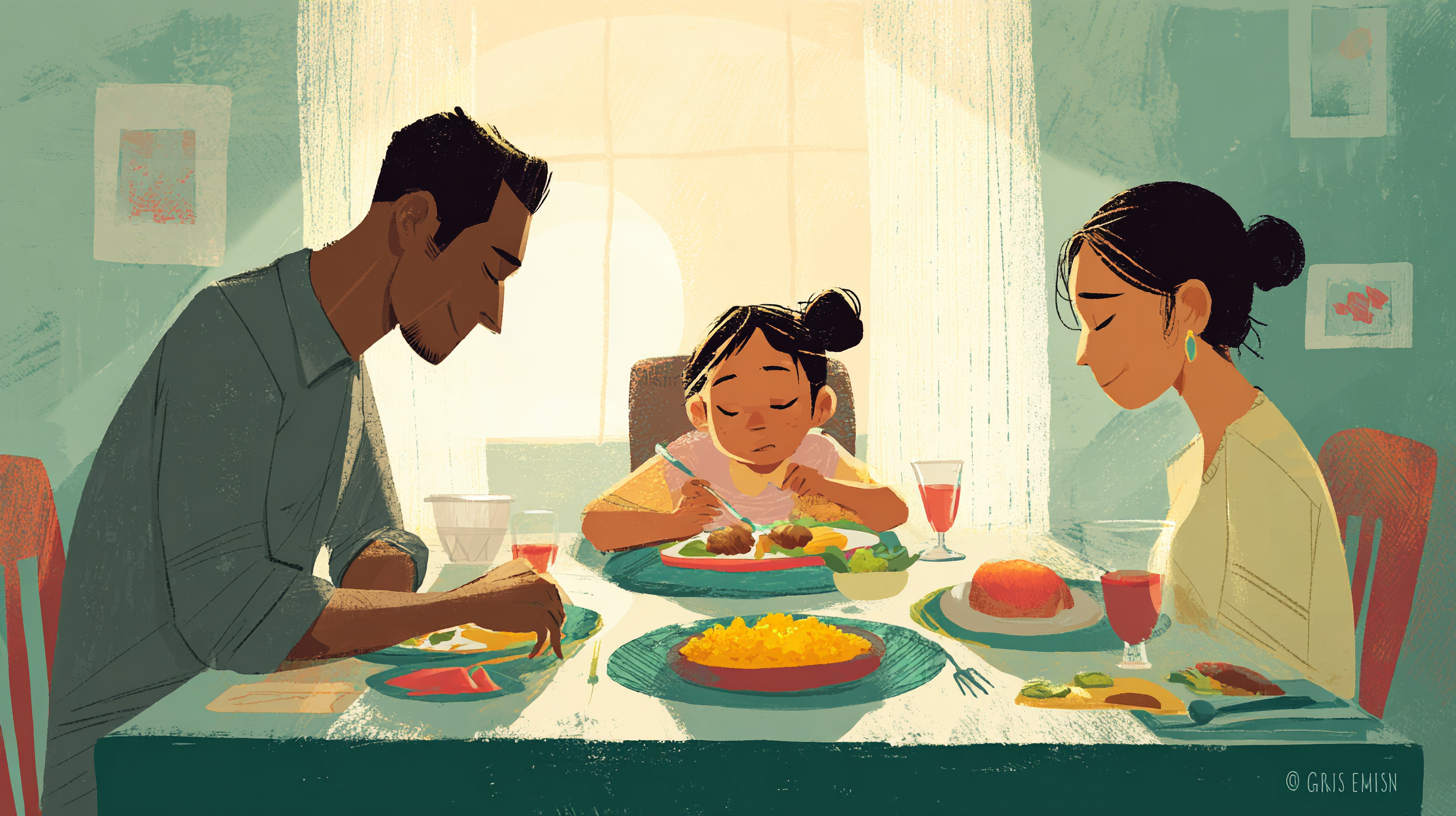 Consistency can travel with your child, even when they move between homes.
 In this article, you’ll learn how to build that kind of stability: the research-backed strategies, the scripts, the real-life examples, and even a little Caribbean flavor you can carry into both kitchens. By the end, you’ll have a practical game plan to turn food from a battleground into a bonding ritual—no matter what your custody schedule looks like.
Why Food Feels So Big After a Separation
Researchers who study co-parenting talk about something called “feeding coparenting”—how adults share responsibility, communicate, and coordinate decisions about a child’s food, routines, and mealtime rules. When this feels cooperative, children tend to eat better, feel safer, and show healthier behavior. When it becomes hostile or chaotic, kids carry that stress straight to the table and often into their long-term relationship with food and their bodies.
After a breakup, daily tasks like who cooks dinner or who packs school lunch suddenly carry emotional weight: they’re proof of who’s “the responsible one,” who has more money, or who is “fun.” Food becomes an easy place for old arguments to reappear because it’s something both households handle every single day. That’s why a simple disagreement about soda or snacks can explode into a much deeper conflict.
At the same time, studies on child routines show that consistent patterns—like regular mealtimes, bedtime structures, and predictable transitions—are linked to better emotional regulation, learning, and behavior. When your child is now juggling two homes, two sets of caregivers, and sometimes two sets of grandparents, those routines become a kind of emotional seatbelt: they keep kids feeling secure, even when their surroundings change.
Choose the statement that feels closest to your situation right now:
If food is the place where the two of you keep bumping heads, you’re not alone. Many co-parents report clashing over how strict or relaxed to be with snacks, how much to pressure kids to eat, and how worried to be about weight. What matters most now is not that you magically become the same, but that you stop using your child’s plate as a scoreboard.
The Non-Negotiables: What Your Child Needs Across Both Homes
Let’s get one thing straight: children can handle different house rules. They already do it at school, at Grandma’s, even at friends’ houses. The real damage doesn’t come from eating mac and cheese at one home and brown rice at the other—it comes from feeling stuck in the middle of adult conflict, shame, or pressure.
From a mix of feeding research and post-divorce coparenting studies, a few “non-negotiables” emerge for supporting kids across two homes:
- Predictable structure: Kids do best when they roughly know when they’ll eat, where they’ll sit, and what to expect at meals, even if the menus differ.
- Emotionally safe mealtimes: No body shaming, no criticizing the other parent in front of the child, and minimal power struggles over bites or portions.
- Consistent core messages: Both homes eventually echo similar messages like “Your body belongs to you” and “We notice hunger and fullness, we don’t ignore it.”
- Low parental conflict: Kids are significantly more affected by high conflict between parents than by the specific custody schedule or small differences in rules.
So the question isn’t “How do we become identical?” It’s “How do we protect these non-negotiables, even when we disagree on the details?”
Building a Shared “Good-Enough” Food Philosophy
Think of your co-parenting food plan like a rhythm section in Caribbean music: the drums and bass don’t play the exact same notes, but they lock into a shared groove. You and your co-parent can have your own cooking styles, cultural dishes, and comfort foods, as long as you agree on the beat you’re both protecting for your child.
Instead of trying to nail down a hundred rules (which will be broken by Tuesday), aim to agree on 3–5 big-picture principles. These might include:
- Offering regular meals and snacks instead of all-day grazing.
- Including fruits or vegetables every day, with room for cultural favorites.
- Allowing treats sometimes, without using them as bribes or punishments.
- Avoiding comments that shame your child’s body or appetite.
- Encouraging hunger and fullness awareness instead of forcing clean plates.
These principles line up with what feeding specialists call “responsive feeding”: adults provide the structure (what, when, where) and the child listens to their body to decide how much to eat. It’s the opposite of power struggles like “Just three more bites” or “No dessert unless you finish everything.”
A real-life example
One mom was laser-focused on “no sugar,” while her ex was more relaxed and let their daughter have fast food on weekends. Instead of battling over each menu choice, they agreed on a shared philosophy:
- Weekdays in both homes would focus on mostly home-cooked meals.
- Weekends could include “fun foods,” but they’d avoid using them as rewards for behavior.
- Both would stop saying “junk” in front of their daughter and talk instead about “everyday foods” and “sometimes foods.”
Did their menus match? Not perfectly. But their daughter stopped hearing, “Daddy feeds you rubbish” and “Mommy is too strict,” which did far more for her long-term relationship with food than any one meal.
Once you’ve sketched this good-enough philosophy, you can weave in simple, nourishing recipes that still taste like home. If you’re raising little ones and want to keep consistent flavors across homes, a resource like the Caribbean Baby Food Recipe Book: Easy & Healthy Homemade Meals for Infants & Toddlers can be a powerful ally—think pumpkin-and-coconut mash, sweet potato callaloo blends, or plantain-based purees that both households can prepare in their own style while still giving your child familiar, comforting tastes.
Interactive Consistency Tracker: Where Are You Already Aligned?
Before you assume “We agree on nothing,” let’s find the overlap you already have. Often, parents are more aligned than it feels in the heat of a text argument.
Any box you tapped is a tiny bridge between your homes. Those are the rhythms you want to protect and, if possible, slowly expand. When kids see, “Both homes make sure I eat breakfast” or “In both homes we sit at the table before bed,” they feel anchored, not tossed around.
Talking About Food Without Starting a War
Raw truth: you and your ex may never enjoy long, warm chats about parenting. That’s okay. Most research on high-conflict co-parenting suggests focusing on “business-like” communication: short, factual, focused on the child, and preferably written, so emotions don’t hijack the conversation.
Think of yourselves as business partners in your child’s well-being. You don’t have to like each other. You do have to keep the company (your child’s health) afloat. That means:
- Using email, a co-parenting app, or shared calendar instead of emotional late-night calls.
- Sharing concrete information: “He refused dinner, only ate yogurt,” instead of “You always spoil him.”
- Keeping messages brief and specific about food, not about past relationship issues.
When there’s a medical concern—food allergies, growth issues, feeding therapy—sending a short, neutral update plus a doctor’s note can lower the temperature. You’re not asking your ex to trust you blindly; you’re inviting them to follow shared professional guidance.
You just found out your child had fast food three times this week at the other home. Tap the response you’re most tempted to send:
The regulated response doesn’t guarantee a yes—but it keeps your child out of the crossfire, makes a specific request, and keeps the door open for problem-solving. Over time, these calmer messages make it easier to negotiate things like shared snack policies or limits on soda, especially when you tie them back to energy, sleep, or school performance instead of blaming the other parent.
Managing Different Approaches Without Crushing Your Child
Here’s a hard but freeing truth: your child’s other home is not your satellite kitchen. You can’t control everything that happens there, just like your ex can’t control everything at your place. But you have enormous influence over how safe, supported, and unconfused your child feels about those differences.
One of the simplest, most powerful lines you can use is: “Every home has different rules, and that’s okay. Here, this is how we do meals.” This sentence does three things at once:
- It normalizes differences instead of painting one home as “good” and the other as “bad.”
- It gives your child clear expectations in your space.
- It keeps you from turning your child into a tiny reporter for adult battles.
When your child comes home excited about soda or late-night snacks at the other house, let yourself feel your feelings privately—but then respond with calm curiosity. Ask how their body felt afterward, not whether the other parent “did it wrong.”
Example conversation:
Child: “At Dad’s we had ice cream after dinner every night!”
You: “Wow, sounds like you enjoyed that. How did your tummy feel after all those treats?”
Child: “Good… but sometimes I felt a bit too full.”
You: “That’s your body talking to you. Here, we’ll enjoy sweets sometimes, and we’ll keep listening to when your body says it’s had enough.”
Why this matters
You’re teaching your child to tune into hunger and fullness signals instead of tying food choices to guilt or loyalty. Over time, that awareness does more to protect them from overeating or disordered eating than any argument you could have with your ex.
If you grew up in a culture—like many Caribbean households—where you were told to “finish every grain of rice” or where loving grandparents showed affection with extra big plates, it can feel strange to lean away from pressure and toward body cues. But this is exactly how you equip your child to handle buffets at Grandma’s, bake sales at school, and yes, looser rules at the other home.
Caribbean-Influenced Ideas Both Homes Can Share
Here’s where things get tasty. Even if your co-parent rolls their eyes at “healthy eating,” most people soften when the food feels familiar and delicious. Caribbean-inspired meals are perfect for this: big flavor, cozy textures, and ingredients that work beautifully for babies, toddlers, and older kids.
From sweet potato blends and pumpkin-with-coconut combinations to plantain purees and mild dhal, you can create dishes that:
- Show up in both homes (even with slightly different seasoning levels).
- Make it easy for extended family to help without derailing your nutrition goals.
- Help your child build a sense of cultural identity that’s bigger than the divorce.
For example, a silky pumpkin-and-coconut mash or a sweet potato callaloo blend can be kept mild for babies and gently seasoned for older kids and adults, so one pot stretches across ages. An index of Caribbean baby dishes—from Amerindian-inspired cereals to callaloo rundowns, plantain-based purees, millet cereals, and gentle stews—gives you endless options to rotate between homes.
If you want a ready-made blueprint, the Caribbean Baby Food Recipe Book: Easy & Healthy Homemade Meals for Infants & Toddlers pulls together 75+ recipes like sweet potato callaloo, coconut rice with peas for little ones, plantain purees, soursop blends, and millet porridges, all organized by age and ingredient. That means both homes can lean on the same trusted source while still adding their personal spin.
 Shared flavors across homes can feel like home base for your child.
 When You Need Backup: Professionals, Coordinators, and Allies
Sometimes, the conflict around food isn’t just annoying—it’s dangerous or relentless. Maybe one parent regularly ignores serious allergies, undermines medical advice, or insists on harsh weight talk that leaves your child anxious and ashamed. This is when bringing in outside support becomes not just helpful, but necessary.
Depending on your situation, that support might look like:
- Paediatrician or dietitian: to give joint guidance about growth, allergies, and feeding approaches you both hear at the same time.
- Feeding therapist: if your child is very selective, anxious, or has sensory/medical feeding challenges that require both homes to follow a plan.
- Parenting coordinator or mediator: for high-conflict cases where you need help writing and following detailed agreements around food, routines, and communication.
If possible, copy your co-parent into appointment summaries or share a neutral written recap like: “The dietitian recommended we both offer regular meals and snacks, avoid forcing bites, and limit sugary drinks to once a day or less.” You’re not asking for permission—you’re offering a clear, shared starting point.
Hidden Truths About Co-Parenting and Food
Let’s pull back the curtain on a few myths that quietly fuel your stress—and your arguments.
- Children are more resilient to different rules than adults think. What really causes harm is ongoing conflict, criticism, and shame. Two different menus can coexist with one shared message: “You are safe, you are loved, and your body is worth listening to.”
- Restrictive, weight-obsessed feeding often backfires, leading to sneaking food, overeating when unsupervised, and anxiety around eating. A balanced, responsive approach—clear structure without fear—protects your child far more than constant food policing.
- Small changes in one home still matter. You can normalize body respect, model calm meals, and protect your child’s sense of safety, even if the other home never fully aligns. Your efforts are not cancelled out just because they’re not copied.
Once you stop chasing perfection and start focusing on what you can control—your own home, your communication style, your child’s sense of being seen and heard—you’ll be amazed how much weight lifts off your shoulders.
Putting It All Together: A Cross-Household Game Plan
You’ve taken in a lot, so let’s map out a simple, realistic plan you can actually use this week. Think of this as your “co-parenting feeding roadmap”—one you can return to on tough days.
If you’re co-parenting a baby or toddler, those “go-to meals” might be as simple as a shared list of purees and soft dishes you both feel comfortable making. A resource with indexed ideas—like calabaza with coconut milk, mild dhal purees, plantain blends, and millet cereals—can save you hours of planning time and help grandparents or sitters stay on the same page too.
 Your child’s body story is being written at every table they sit at—yours, your ex’s, and everyone in between.
 For the Nights You Wonder If You’re Doing Enough
On the toughest evenings—the ones where you pack a carefully balanced lunch, only for your child to say, “I like the food at the other house better”—it’s easy to feel like you’re losing. But your child is not comparing macros; they’re comparing how safe and relaxed they feel.
Years from now, what they’ll remember most will not be whether you banned soda or allowed chips twice a week. They’ll remember:
- Who looked them in the eye when they were nervous to try a new food.
- Who noticed when they were full and didn’t force another bite.
- Who spoke kindly about their body and didn’t use them as the referee in adult fights.
Your consistency, your calm, and your willingness to keep learning matter more than your perfection. And every time you choose to de-escalate, to send a neutral message instead of a fiery one, to offer a gentle meal instead of a guilt-laden lecture, you cast a vote for the kind of parent—and the kind of human—you’re becoming.
If part of that next step for you is simplifying the “what do I feed them?” question, especially for babies and toddlers, consider building a shared library of recipes that carry your culture and your values across both homes. A collection like the Caribbean Baby Food Recipe Book: Easy & Healthy Homemade Meals for Infants & Toddlers can become neutral ground—something you and your co-parent both pull from when you’re tired, busy, or simply want to give your child the comfort of familiar island flavors, from sweet plantain purees to gentle coconut-and-pumpkin mashes.
You may not be able to rewrite the past of your relationship, but you are actively writing your child’s story with food and with their body right now. Every shared routine, every calm message, every small plate of something nourishing in both kitchens is a sentence in that story. Start with the next meal. Build from there. Your child doesn’t need a perfect team—just a team that keeps showing up.

Kelley's culinary creations are a fusion of her Caribbean roots and modern nutritional science, resulting in baby-friendly dishes that are both developmentally appropriate and bursting with flavor. Her expertise in oral motor development and texture progression ensures that every recipe supports your little one's feeding milestones while honoring cultural traditions.
Join Kelley on her flavorful journey as she shares treasured family recipes adapted for tiny taste buds, evidence-based feeding guidance, insightful parenting anecdotes, and the joy of celebrating food, culture, and motherhood. Get ready to immerse yourself in the captivating world of Kelley Black and unlock the vibrant flavors of the Caribbean for your growing baby, one nutritious bite at a time.
- The Feeding Revolution: Why Your Everyday Meals Are Changing the World - October 13, 2026
- Your Feeding Story Matters More Than The “Perfect” One Online - October 12, 2026
- Looking Forward: Stepping Into Your Confident Feeding Future - October 11, 2026