
Baby Food Disasters: 10 Epic Fails and What I Learned
Here’s something nobody warned me about when I opened that first jar of sweet potato puree: I was about to enter a combat zone. Not the kind where you need tactical gear (though a hazmat suit wouldn’t hurt), but the kind where food becomes a projectile, where your baby’s face says “I love you” while their hands say “watch me paint the ceiling,” and where you’ll question every parenting decision you’ve ever made—all before 9 AM.
If you’ve ever scraped pureed carrots off your hair, discovered avocado in places avocado should never be, or watched in slow-motion horror as your baby launched a bowl of oatmeal across the kitchen like a tiny food catapult, you’re in the right place. What you’re experiencing isn’t failure—it’s a rite of passage. And I’m about to walk you through the ten most spectacular feeding disasters that happen to nearly every parent, why they’re completely normal, and how to laugh your way through the chaos while building the kind of resilience that’ll serve you for years to come.
Which Disaster Are YOU Living Right Now?
Click on the numbers below to reveal common feeding disasters and see if yours made the list!
The Great Projectile Pumpkin Incident (Disaster #10)
It started innocently enough. I’d spent thirty minutes preparing the most beautiful Calabaza con Coco from traditional Caribbean recipes, thinking my baby would appreciate the creamy texture and subtle sweetness. What I didn’t anticipate was my six-month-old’s surprisingly accurate throwing arm and fascination with physics.
One moment, the spoon was approaching her mouth. The next, orange puree was dripping from the light fixture above us. Research shows that food throwing occurs in about 50% of meals with toddlers, and it’s not defiance—it’s sensory exploration and testing cause-and-effect relationships. Your baby isn’t rejecting your cooking; they’re conducting science experiments with gravity, trajectory, and parental reaction time.
The recovery strategy that saved my sanity? Recognizing that throwing typically signals the end of actual hunger. When the food starts flying, the meal is done. Remove the food calmly, without offering alternatives or making a big production. You’re teaching that meals have natural endings, and that’s a lesson worth more than the pumpkin currently decorating your wall.
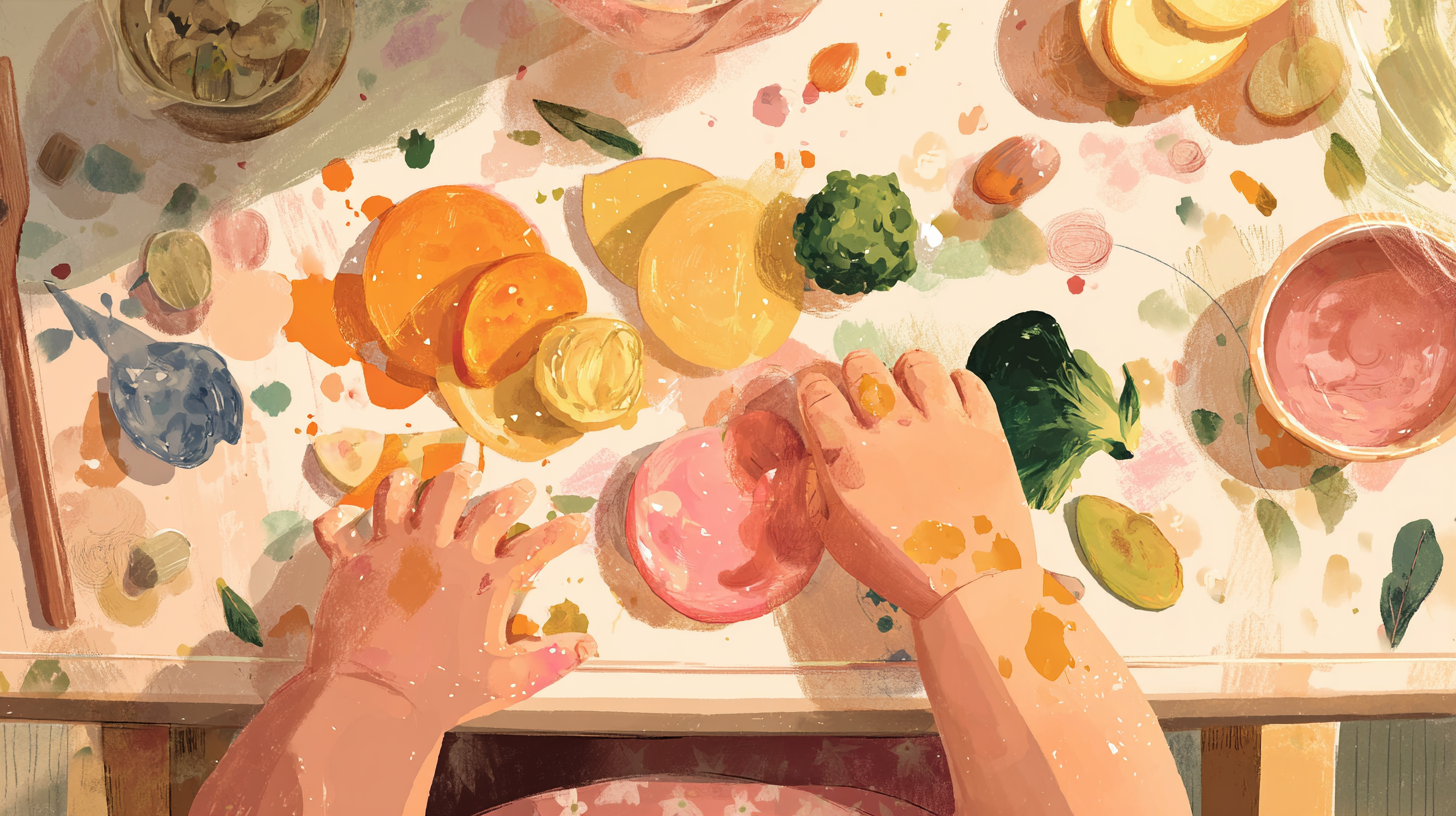
The Gagging Episode That Aged Me Ten Years (Disaster #9)
Nothing—and I mean nothing—prepares you for the first time your baby gags on solid food. It happened to me during what should have been a peaceful introduction to ground turkey mixed with sweet potato. My daughter’s face went red, she made choking sounds, and I went from calm parent to panic mode faster than you can say “infant CPR.”
Here’s the shocking truth that would have saved me considerable anxiety: gagging is reasonably common in all babies regardless of feeding method, and it’s actually a protective reflex that prevents choking. Your baby’s gag reflex is positioned further forward in their mouth than an adult’s, which means they gag more easily—and that’s by design. Studies confirm that baby-led weaning doesn’t increase choking risk compared to traditional spoon-feeding when safety guidelines are followed.
What went wrong in my case wasn’t the food itself, but my expectation that feeding should be smooth and problem-free. Occasional gagging related to certain textures lessens with repeated exposure. However, you should seek professional help if gagging occurs daily, always leads to vomiting, or prevents weight gain. The recovery? I learned to stay calm (babies read our reactions), ensure my daughter was seated properly with foot support, and refreshed my knowledge of infant first aid. That confidence made all the difference.
Feeding Disaster Survival Quiz
Test your feeding disaster knowledge!
When your baby gags on food, what’s the BEST first response?
The 50-Calorie Day Nightmare (Disaster #8)
There’s a viral story that haunts baby-led weaning groups: a ten-month-old consuming only 50 calories daily despite months of enthusiastic food offerings. This wasn’t my personal disaster, but it represents every parent’s fear—what if my baby just…won’t eat?
This scenario illustrates feeding aversion, which can develop when babies gag excessively on textures they’re not developmentally ready for. About 26.9% of toddlers and early preschoolers experience feeding problems, with prevalence ranging from 19% to 50% depending on age and assessment criteria. The lesson here isn’t that baby-led weaning is dangerous, but that rigid adherence to any single method without considering your individual child can backfire.
Recovery requires professional feeding therapy evaluation and potentially transitioning to modified approaches that reduce stress. The breakthrough insight? Feeding challenges are common, and seeking help early isn’t failure—it’s responsive parenting. If you’re struggling with getting nutritious meals into your baby without the battle, exploring tried-and-tested recipes like those in the Caribbean Baby Food Recipe Book can introduce variety through familiar, comforting flavors that actually appeal to developing palates.
The Veggie Rejection Rebellion (Disaster #7)
I presented steamed broccoli with such hope. My daughter looked at it like I’d offered her a plate of disappointment. Then came the carrots. The peas. The carefully roasted sweet potato that she’d loved last week but now treated like a personal insult. Welcome to the veggie rejection phase, experienced by approximately 70% of young children due to biological sensitivity to bitter compounds.
What went wrong? My expectation that babies should like vegetables immediately, and my reaction when she didn’t. I fell into the classic trap: pressuring, bribing, and making vegetables the enemy by turning them into a battle. But here’s the truth—children’s taste sensitivity decreases over time, and repeated neutral exposure (not forcing) gradually increases acceptance.
The recovery strategy that transformed our mealtimes was backing off entirely. I continued offering vegetables alongside accepted foods, but without comment, pressure, or fanfare. Some days she ate them. Most days she didn’t. And slowly, over months not weeks, vegetables became just another food instead of a negotiation. Research confirms that children need 10-15 exposures to new foods before acceptance, and pressure tactics actually decrease willingness to try new items.
Your Personal Mess Meter
On a scale from “sparkling clean” to “crime scene,” where does your typical mealtime land?
The Food Refusal Standoff (Disaster #6)
For three days straight, my daughter refused everything except breast milk. Not the butternut squash she’d devoured yesterday. Not the banana that was her “safe food.” Nothing. I spiraled into catastrophic thinking: failure to thrive, nutritional deficiencies, and wondering if I’d somehow broken my child’s relationship with food forever.
The reality? “Not always hungry at mealtime” is the most frequent infant and toddler problematic feeding behavior, occurring in 33% of infants and 52% of toddlers. Food refusal is so common it’s practically a developmental milestone. What went wrong was my response—offering multiple alternatives, pleading, and turning meals into high-stakes negotiations.
The recovery came from understanding the division of responsibility: parents decide what, when, and where to feed; children decide whether and how much to eat. I continued offering regular meals without pressure or alternatives. Within a week, her appetite returned naturally. The lesson? Trust your child’s internal hunger cues more than your anxiety. Occasional food refusal is normal fluctuation, not a feeding disorder.

The Texture Trauma Meltdown (Disaster #5)
I thought I was being progressive by introducing varied textures early. What I created was a baby who gagged or vomited if disliked foods were simply seen or smelled, eating only smooth textures or “bite and dissolve” foods. This affects children who were given only pureed foods past the optimal texture progression window, but it can also happen when textures advance too quickly.
Research on extreme food refusal in toddlers shows this pattern is more common than parents realize, and it’s not willful behavior—it’s genuine sensory distress. What went wrong was pushing texture progression according to a timeline instead of my baby’s readiness signals. Some babies need slower transitions; others are ready for finger foods at six months. There’s no universal schedule.
Recovery required backing up to textures my daughter could handle comfortably, then advancing incrementally with zero pressure. I also learned never to hide new foods in liked foods—sensitive children detect hidden tastes and may reject formerly accepted items. The breakthrough came when I stopped fighting her nervous system and started working with it. Introducing cultural foods with naturally varied textures, like the recipes found in resources focused on Caribbean baby meals, helped us find middle ground between smooth purees and challenging chunks.
The Mixed Method Confusion Chaos (Disaster #4)
In my desperation to “get it right,” I tried everything simultaneously: purees, pouches, baby-led weaning, spoon-feeding, self-feeding—sometimes all in one meal. What I created was confusion for both of us and significantly higher problematic feeding scores. Research shows that using multiple approaches simultaneously correlates with 4.4 points higher problematic feeding scores.
What went wrong was treating feeding methods like a buffet instead of committing to one developmentally appropriate approach. The mixed signals prevented my daughter from developing consistent eating skills and expectations. Was this a meal where she fed herself? Where I fed her? Where she squeezed food from a pouch? The inconsistency created anxiety for both of us.
Recovery meant choosing one method—in our case, a modified baby-led weaning approach with some supported spoon-feeding—and implementing it consistently. Within two weeks, mealtimes became calmer because we both knew what to expect. The lesson? Consistency beats variety when it comes to feeding methods. Pick an approach that fits your family’s lifestyle and your baby’s development, then stick with it long enough to see results.
Feeding Disaster Bingo!
Click every disaster you’ve personally experienced:
The Short-Order Cook Syndrome (Disaster #3)
It started with good intentions: if she won’t eat chicken, maybe she’ll eat turkey. No? How about pasta. Still no? Cheese? Crackers? Before I knew it, I was running a 24-hour diner from my kitchen, making multiple meals per sitting, and my daughter was eating less variety than ever. Studies show 85% of parents modify meals to accommodate children, but this actually undermines eating confidence and variety expansion.
What went wrong was my belief that my job was ensuring she ate something—anything—at every meal, even if that meant becoming a short-order cook. But children won’t starve themselves, and offering multiple alternatives teaches them that persistence pays off in the form of preferred foods. It also prevents them from learning to eat what’s offered or wait for the next meal.
Recovery required a hard reset. I started offering one meal for the whole family with at least one food I knew she’d accept (like rice or fruit), but no alternatives. The first few meals were rough. She barely ate. I nearly caved. But within a week, she started trying foods she’d previously rejected because they were simply what was available. The lesson? Parental confidence matters more than the specific foods offered. When you stop negotiating, children stop expecting negotiation.
The Choking Fear Freeze (Disaster #2)
I watched my mother-in-law give my eight-month-old a grape. A whole grape. Not quartered. Not even halved. My heart stopped. I lunged across the room like a action hero, snatching it from my daughter’s hand while shouting about choking hazards. The room fell silent. Everyone stared. And I realized my fear had hijacked the moment.
Here’s the thing: my fear wasn’t wrong—hot dogs, grapes, and hard candy rank as top choking hazards for children under four. But my response was pure anxiety without strategy. What went wrong was letting fear paralyze me instead of preparing me. I hadn’t refreshed my infant CPR knowledge. I hadn’t established clear safety guidelines with caregivers. I was reacting instead of responding.
Recovery meant taking an infant CPR class, creating a family safety guideline sheet, and learning to distinguish between actual choking (silent, unable to cough) and gagging (noisy, working it out themselves). I also learned proper food preparation: cut hot dogs extensively until age 3-4, quarter grapes lengthwise, avoid hard candy entirely, and ensure babies eat seated with foot support so they can self-recover from gags. Knowledge replaced panic, and mealtimes became less terrifying for everyone.

The Mealtime Chaos Free-For-All (Disaster #1)
And here we arrive at the ultimate disaster—the one that encompasses all others. In my household, “mealtime” was whatever time someone was hungry, wherever they happened to be, eating whatever was fastest. My daughter ate in the stroller, the car seat, wandering around the living room, sometimes even on the floor. Research shows that about 31% of families have no definite feeding place, with children eating while walking (6.1%) or on the floor (7.8%).
What went wrong was treating feeding like a logistical problem to solve rather than a structured routine to establish. Without consistent meal timing and location, my daughter couldn’t recognize hunger cues, couldn’t focus on eating, and couldn’t develop the skills needed for independent feeding. The chaos I thought was flexibility was actually creating confusion.
Recovery required establishing structure: designated meal and snack times, always at the table, always seated, always together when possible. The first week felt rigid and inconvenient. But within two weeks, my daughter started showing hunger at predictable times, eating more at meals, and developing better self-feeding skills. The lesson? Structure isn’t restriction; it’s the framework that allows feeding skills to flourish. Children thrive on predictability, even when parents think they’re being helpful with flexibility.
Your Feeding Resilience Level
Click the stage that best describes where you are right now:
Building Your Feeding Disaster Survival Kit
Every parent who survives these ten disasters emerges with something more valuable than clean walls: resilience. Research from 2025 emphasizes that humor fosters cognitive flexibility, reduces stress, and promotes problem-solving skills in parenting contexts. The parents who thrive aren’t the ones who avoid disasters—they’re the ones who laugh through them, learn from them, and build support systems around them.
Your survival kit needs three essential elements. First, community—join online support groups where shared experiences normalize struggles. Studies show that online support groups decrease symptoms of anxiety, depression, and social isolation. When you see other parents posting photos of food-covered ceilings, you realize you’re not failing; you’re participating in universal parenting chaos. Second, education grounded in evidence—understanding that 85% of parents struggle with feeding challenges, that gagging is protective not dangerous, and that texture sensitivity is developmental not defiance transforms disasters from personal failures to normal phases.
Third, humor as a coping strategy. When you can photograph the avocado disaster instead of crying over it, when you can share the veggie rejection story in a parenting group instead of internalizing it as inadequacy, you’re building the emotional resilience that’ll serve you through the teenage years and beyond. Tailored interventions that incorporate humor have proven effective for resilience-building, turning what feels like chaos into stories you’ll laugh about for decades.
Your Personal Disaster Mantra Generator
Need a laugh? Generate your personalized feeding disaster mantra!
The Truth About “Normal” Feeding
Here’s what nobody tells you in those glossy parenting magazines: there is no normal. There’s only your normal. Some babies take to solids like champions. Others approach new foods like they’re auditioning for a dramatic performance of “The Great Refusal.” Both are fine. Both are normal. Both will eventually eat without turning your kitchen into an art installation.
The prevalence of feeding problems decreases from 28.1% in the second year to 19% by the fourth year of life, which means most feeding challenges resolve naturally with patience and time. About 50% of meals involve throwing or playing with food rather than eating—not because you’re doing it wrong, but because that’s how babies learn. Approximately 70% of young children are sensitive to bitter compounds in vegetables, explaining why your carefully prepared greens get the same reception as poison.
What makes the difference between parents who survive and parents who thrive isn’t avoiding disasters—it’s reframing them. Every food throw is a physics lesson. Every texture rejection is your baby communicating preferences. Every chaotic meal is practice for the thousands of mealtimes ahead. When you stop seeing disasters as failures and start seeing them as data points in your child’s unique feeding journey, everything changes. And when you’re ready to introduce foods that feel both adventurous and rooted in tradition, exploring options like Caribbean-inspired baby meals can bring joy back to the table through flavors that nourish both body and cultural connection.
What I Know Now That I Wish I’d Known Then
If I could go back to that first catastrophic pumpkin incident, I’d tell my panicked, pureed-covered self a few critical truths. First, this phase is temporary. The child who throws every meal today will eventually eat neatly (well, relatively). The toddler who rejects vegetables now might become a teenager who loves salad (miracles happen). The baby who gags on every texture will develop the oral motor skills they need with time and practice.
Second, your calm matters more than your cooking. Research consistently shows that parental anxiety around feeding increases problematic feeding behaviors in children. When you catastrophize gagging, your baby reads that fear and becomes more anxious. When you pressure vegetable consumption, you create aversion instead of acceptance. When you offer five different meals because she rejected the first one, you’re teaching persistence pays off in preferred foods. Your emotional regulation is the most important ingredient in any meal.
Third, feeding challenges are common—not a reflection of your adequacy as a parent. About 26.9% of children experience feeding challenges, isolation is the enemy, and seeking help is strength not weakness. The unified definition of Pediatric Feeding Disorder established in 2024 enables better communication between healthcare providers and reduces parental guilt by establishing clear criteria distinguishing normal feeding variations from disorders requiring intervention.
Fourth, structure beats flexibility every time. Consistent meal timing and location, designated eating environments, and predictable feeding methods reduce chaos and accelerate skill development. The rigidity that feels constraining initially becomes the framework that allows authentic flexibility later. And finally, humor transforms everything. When you can laugh at the disasters instead of letting them define you, you’re modeling resilience, emotional regulation, and perspective-taking for your child. Those lessons matter infinitely more than whether they ate their peas today.
The ten disasters I’ve shared aren’t cautionary tales—they’re milestones. Every parent who feeds a child will encounter most of them. Some of you are living through them right now, wondering if you’ll survive. You will. Not only that, you’ll look back and realize these chaotic, food-covered moments were the magic. Because feeding isn’t just about nutrition; it’s about connection, trust, patience, and learning to laugh when life gets messy. And life with babies is nothing if not messy. So grab your bibs, embrace the chaos, and remember: every disaster is just another story you’ll tell at their wedding someday. Now, who’s ready to laugh their way through tomorrow’s breakfast?

Kelley's culinary creations are a fusion of her Caribbean roots and modern nutritional science, resulting in baby-friendly dishes that are both developmentally appropriate and bursting with flavor. Her expertise in oral motor development and texture progression ensures that every recipe supports your little one's feeding milestones while honoring cultural traditions.
Join Kelley on her flavorful journey as she shares treasured family recipes adapted for tiny taste buds, evidence-based feeding guidance, insightful parenting anecdotes, and the joy of celebrating food, culture, and motherhood. Get ready to immerse yourself in the captivating world of Kelley Black and unlock the vibrant flavors of the Caribbean for your growing baby, one nutritious bite at a time.
- The Feeding Revolution: Why Your Everyday Meals Are Changing the World - October 13, 2026
- Your Feeding Story Matters More Than The “Perfect” One Online - October 12, 2026
- Looking Forward: Stepping Into Your Confident Feeding Future - October 11, 2026