Ackee for Babies: A Caribbean Parent’s Guide to a Beloved but High‑Risk Fruit
Honouring your island roots while fiercely protecting your little one’s safety.
If you grew up waking to the smell of ackee and saltfish on a Sunday morning, there is a good chance a part of you can’t wait to see that same golden fruit on your baby’s plate one day. At the same time, if you have ever heard the phrase “Jamaican vomiting sickness,” your stomach probably tightens at the thought of getting it wrong.
This article walks that exact tightrope with you: proud Caribbean parent on one side, no‑nonsense safety advocate on the other. Before we talk about when or even whether ackee belongs in your baby’s bowl, let’s peek at two very different futures.
What Exactly Is Ackee, And Why Is It So Complicated?
Ackee is a pear‑shaped fruit from the evergreen tree Blighia sapida, originally from West Africa and now deeply rooted in Jamaican soil as the national fruit and the star of Jamaica’s national dish, ackee and saltfish. In Caribbean homes and across the diaspora, those soft yellow arils are more than food; they are memory, identity, and comfort on a plate.
But hidden inside that same fruit is one of the most powerful plant toxins ever studied in food: hypoglycin A. This toxin is especially concentrated in unripe fruit and in the shiny black seeds and pinkish membranes that must never be eaten. The difference between a nourishing breakfast and a medical emergency often comes down to timing (waiting for the pod to naturally open on the tree), trimming (removing every trace of seed and membrane), and how much is eaten.
Historically, when those safety rules were not respected, communities in Jamaica saw heartbreaking outbreaks of what was once called “Jamaican vomiting sickness.” Children who ate unripe or improperly prepared ackee could go from “a little quiet” to repeated vomiting, seizures, and coma in a matter of hours because hypoglycin strips the body’s ability to regulate blood sugar. That history still sits in the background every time a caregiver wonders, “Is my baby ready for ackee?”
What the Science Says: Nutrition, Toxins, and Tiny Bodies
When ackee is handled correctly and fully ripe, the edible arils are surprisingly nutrient‑dense. Analyses of boiled arils show that they are high in fat, with more than half of their calories coming from fat, and that a large share of those fats are unsaturated. There is also meaningful protein and energy, which helps explain why ackee has been such a valued staple for families needing filling, affordable meals. Modern research has also documented essential amino acids and minerals, supporting ackee’s reputation as a rich, plant‑based source of energy and fat in Caribbean diets.
The challenge is that this nourishing side comes packaged with hypoglycin A, a toxin that is heat‑stable and not completely destroyed by cooking. Levels drop dramatically when the fruit fully ripens and opens naturally on the tree and then again when the cleaned arils are boiled and the cooking water thrown away. Even so, children’s smaller glycogen stores and developing metabolisms mean they are far more vulnerable to the same exposure level than a healthy adult.
Outbreak reports from Jamaica have recorded nearly two hundred suspected cases of hypoglycemic toxicity in just a few seasons, with dozens of deaths. Many of those affected were children in low‑resource settings, sometimes under‑nourished, which made their bodies even less able to cope with sudden, toxin‑driven drops in blood sugar. Global research on related soapberry fruits, such as litchi, has tied similar toxins to clusters of acute encephalitis‑like illness in children, reinforcing the message that this is not a theoretical risk.
Mini Safety Quiz: Would This Ackee Be Safe?
Before thinking about babies, see how your instincts line up with what toxicologists and Caribbean health ministries recommend. Tap an answer on each card.
Why Experts Are So Cautious About Ackee and Infants
Toxicology teams, rare‑disease registries, and emergency medicine specialists all describe acute ackee intoxication in similar terms: a preventable but potentially life‑threatening poisoning. The pattern is strikingly consistent—children who eat unripe or improperly prepared ackee develop repeated vomiting, profound lethargy, seizures, and dangerously low blood sugar, often without fever or signs of infection. In severe cases, especially where access to intensive care is limited, death can follow within a short window.
Public health authorities in Jamaica have been very direct in their guidance. They emphasize that only fruit which has opened naturally on the tree should be harvested, that seeds and the reddish membrane must always be discarded, and that no one should eat ackee that tastes bitter or looks under‑ripe. Children are highlighted as a particularly vulnerable group. While those advisories speak to the whole family, they create a strong, implicit message for parents of infants: if even adults need to be this careful, babies—who are just starting solids—should not be first in line.
On the paediatric side, international complementary feeding guidance tends to focus on iron‑rich foods, safe textures, and choking and allergy risks. Ackee is rarely mentioned by name because it is regionally specific, but experts addressing food toxins in infancy consistently group soapberry‑type toxins as major concerns. When there is little research on safe exposure thresholds in babies and a long history of severe child illness, most clinicians err on the side of delaying or avoiding ackee entirely in the first year.
Cultural Realities: When Ackee Appears on Little Plates
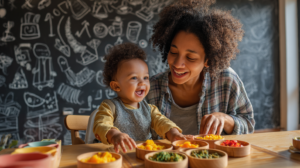
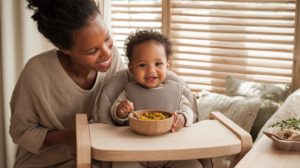
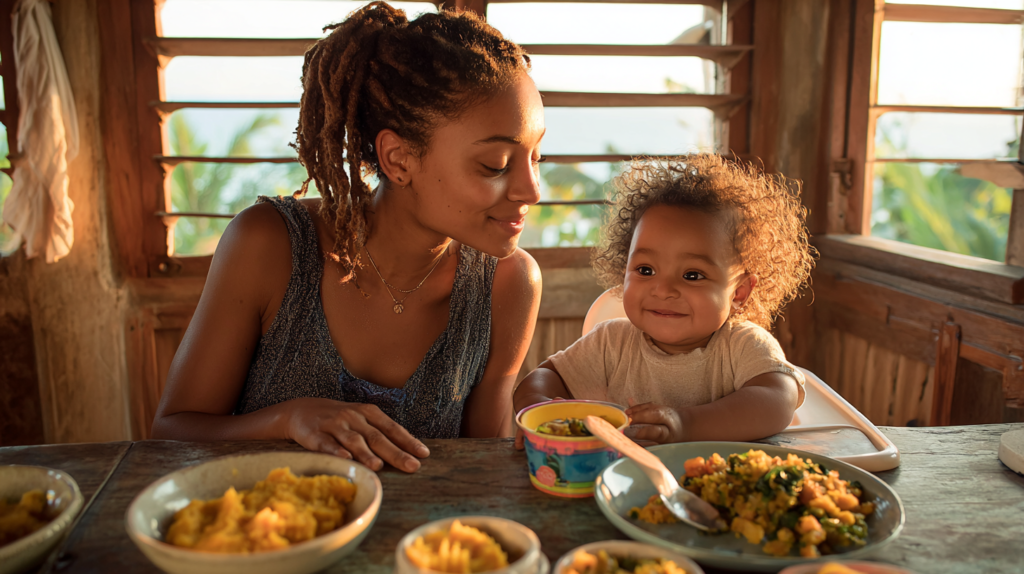
Step into a Jamaican kitchen on a Sunday and you will often see one big pot feeding three generations at once. Adults and older children might tuck into plates piled with ackee and saltfish, fried dumplings, breadfruit, or yam. Babies at the same table are more likely to be offered softer, safer sides: mashed yellow yam, green banana, pumpkin, callaloo, or flaked fish with bones and excess salt carefully removed.
In many families, ackee is not an official “weaning food” so much as a taste of what everyone else is eating, usually later in toddlerhood. A parent might offer a tiny forkful of well‑cooked, canned ackee to a curious two‑year‑old while still intentionally building the baby’s daily meals around lower‑risk staples. For some grandparents, there is pride in introducing “the national dish” early; for others, memories of older outbreaks are enough to keep ackee strictly off the baby’s menu.
At the same time, Caribbean baby food innovation has exploded. Recipes based on cornmeal porridge, callaloo and sweet potato, coconut rice and peas, plantain mash, and Amerindian farine cereals give parents endless ways to pass on culture without venturing into high‑risk territory. Many of these ideas are gathered and adapted for babies 6+ months in the Caribbean Baby Food Recipe Book: Easy & Healthy Homemade Meals for Infants & Toddlers, which offers dozens of island‑inspired recipes that keep baby safety front and centre while still tasting like “home.”
Age Guidelines: When (If Ever) to Consider Ackee
Because there are no large, controlled studies defining a “safe” age for ackee, most advice combines what is known about the toxin with general infant‑feeding principles. A conservative, culturally sensitive pattern looks like this: no ackee at all in the first year; cautious, tiny tastes only in later toddlerhood; and full portions reserved for older children and adults once they can clearly communicate how they feel and you are certain about the fruit’s preparation.
That may feel slow, especially if you grew up eating ackee regularly from early childhood. Yet when you weigh the small benefit of introducing this one food early against the very real possibility of severe illness from a single mistake, delaying starts to look less like deprivation and more like a loving boundary. Babies do not miss what they have never had, especially when their bowls are full of other delicious, culturally familiar foods.
Tap each circle that already fits your baby. The summary will update as you go.
Shockers Parents Rarely Hear About Ackee
Here is the first uncomfortable truth: cooking alone does not magically make ackee safe. Hypoglycin A is not one of those toxins that simply disappears with heat. The biggest drop in toxicity happens before the pan ever hits the stove—when the fruit ripens on the tree and splits open on its own. Boiling helps, but only when you started with properly mature fruit and removed every dangerous part.
Second, hypoglycin does not just affect the stomach. It interferes with the way the body uses fat and sugar for energy at a cellular level, especially in the liver. That is why blood tests in poisoned patients show trouble with both liver function and blood sugar regulation. In an already small, fast‑growing infant, there is simply no “buffer” to ride out that kind of metabolic storm.
Third, ackee is not the only soapberry fruit that has caused child deaths. Similar toxins have been implicated in tragic clusters of mysteriously sick children in parts of Asia during litchi season, where youngsters skipped dinner and then snacked on unripe fruit from local orchards. That link has shifted the way global health experts talk about fruit‑related toxins in children and has put ackee under an even sharper lens.
Balancing Cultural Pride and Real Risk
Here is the heart of the struggle: Caribbean parents are often told, explicitly or silently, to strip culture out of the highchair and replace it with bland, imported foods. That does not feel good, and it is not necessary. What is necessary is learning which traditional ingredients are safe for tiny tummies and which are better saved for the day your child can join you fully at the big people’s table.
Think of ackee as one of your “adults‑only until proven otherwise” foods, like strong rum or fiery hot pepper sauce. You would not feel guilty about waiting to introduce those, because you instinctively understand the gap between a baby’s body and an adult’s. The same logic applies here: waiting to share ackee is not a rejection of your heritage; it is one of the ways you protect it—by making sure your child lives long enough to enjoy that heritage for decades to come.
Choose the statement that feels closest to where you are today. Your guidance will shift with you.
Practical Safety Rules If Ackee Is in Your Home
Some caregivers can simply choose never to bring fresh ackee into the house while they have small children. Others may live with relatives who harvest from the backyard tree and cook it weekly. If ackee will be present in your environment, there are practical steps to make that reality as safe as possible for babies and young children.
Non‑Negotiables for Fresh Ackee
- Only use fruit that has ripened and opened naturally on the tree. Never force pods open or buy ones that look green or half‑ripe.
- Discard all seeds and every trace of the pinkish or reddish membrane. Only the clean, cream‑to‑yellow arils should be kept.
- Boil arils thoroughly and always throw out the cooking water. Do not reuse that water for soups, porridges, or drinks.
- Never taste or serve ackee that seems bitter, has an odd smell, or comes from a tree with a history of making people sick.
- Store raw ackee safely away from baby foods and wash all utensils, cutting boards, and pots that touched raw fruit.
Absolute Rules for Babies and Toddlers
- No ackee at all for infants under 12 months, even in mixed family dishes or “just a lick off the spoon.”
- For toddlers and preschoolers who share the table, dish up their food separately before any ackee is added to the pot or plate.
- Teach older siblings not to offer “tastes” of ackee to the baby, even out of love.
- If a child of any age who might have eaten ackee becomes unusually sleepy, starts vomiting, or seems “not like themselves,” seek urgent medical care and tell clinicians there was potential ackee exposure.
Safer Ways to Share Caribbean Flavours Before Ackee
The good news is that Caribbean cuisine is full of baby‑friendly ingredients that carry just as much “island soul” as ackee, without its toxic risks. Think of creamy plantain and guava purées, silky pumpkin simmered with coconut milk, mashed sweet potato with callaloo, cornmeal porridges scented lightly with cinnamon, and smooth rice‑and‑bean blends. With the right preparation, many of the region’s everyday staples can be made soft, mild, and nutritionally powerful for babies 6–12 months and beyond.
If you are looking for structure and inspiration, the Caribbean Baby Food Recipe Book: Easy & Healthy Homemade Meals for Infants & Toddlers draws on favourites like plantain, calabaza, cassava, yams, coconut milk, beans, millet, and more, adapting them into smooth purées, gentle porridges, and step‑up textures that match your baby’s readiness. It also includes country‑specific sections—Jamaican, Trini, Dominican, Haitian, Guyanese and others—so you can introduce your baby to your exact corner of the Caribbean, one safe spoon at a time.
For example, instead of offering ackee at 9 months, you might serve:
- A mashed plantain and sweet potato blend with a drizzle of coconut milk.
- A smooth coconut rice and red peas purée with thyme removed and salt kept minimal.
- A sunshine‑coloured pumpkin purée with a whisper of geera or pimento, if your baby already tolerates mild spices.
These kinds of recipes give you what you are truly craving: a highchair that smells like your grandmother’s kitchen, without planting a toxin‑risk landmine in your family routine.
What Social Media Gets Wrong About Ackee for Babies
Short‑form content loves a shock factor. A quick scroll can turn up videos of ten‑month‑olds gnawing on spicy wings, sipping soda, or, occasionally, sampling traditional dishes like ackee and saltfish. What you do not see in a 15‑second clip is lab verification that the ackee was safe, blood sugar checks afterwards, or the long‑term consequences if something went wrong.
Many well‑meaning creators focus on texture—“It’s soft, so it’s fine for baby‑led weaning”—without understanding that toxicity operates on a completely different axis from choking. A soft, well‑seasoned food can still be a biochemical minefield. Influencer content also tends to blur ages: a recipe described as “baby‑friendly” might actually be demonstrated with a sturdy two‑year‑old, not a 7‑month‑old who only started solids last week.
When in doubt, let social media serve as cultural inspiration, not medical advice. Use it to discover new flavour combinations or family‑meal ideas, then cross‑check the highest‑risk ingredients—like ackee—against trusted health guidance before they ever come near your baby’s bowl. Your child’s liver and brain chemistry are not a trend.
A Personal Story: When Love Meets Limits
One Caribbean parent remembers standing in her mother’s kitchen, baby on hip, watching fresh ackee tumble into a pot. The aroma snapped her straight back to childhood. As her mother stirred the saltfish into the golden folds, she reached for a tiny spoonful, fully intending to cool it and “just let the baby taste.” Her hand froze halfway. Every article she had read about hypoglycin, every story of children who never woke up, flashed through her mind.
They ended up doing something different. The baby’s plate held mashed yellow yam, pumpkin cooked in coconut milk, and gently flaked fish with the salt rinsed away. The adults ate ackee and saltfish with the same sides. There was laughter, music, and the same old jokes about who “teef” the last dumpling. No one left the table feeling that culture had been lost. If anything, that moment became a new kind of tradition: one where information, not fear, decided what went on the smallest plate.
This is the mental shift so many Caribbean families are quietly making. Instead of seeing safety rules as an attack on heritage, they treat them as an update—like moving from kerosene lamps to electric lights. The heart of the home is the same. The tools have changed because we know more now.
Your Ackee Decision: A Simple, Brave Framework
By now you have seen that this is not a simple “yes or no” food in the Caribbean story. It is a “yes for some, later, and never for babies in the first year” kind of food. The decision you make for your family will depend on your child’s age, health, access to safe fruit, and your own risk tolerance. What matters most is that you decide with your eyes fully open, not because of pressure at a family gathering or a viral video.
A helpful way to look at it is this: in the first year of life, babies need absolutely nothing that ackee uniquely provides. Every nutrient you might hope to get from ackee—fat, energy, some protein—can be obtained from safer Caribbean ingredients you already love. That means there is no nutritional gap created by skipping ackee in infancy. What you gain by waiting is massive: a dramatically lower chance of ever seeing your child in an emergency room with unexplained vomiting and seizures after breakfast.
Tap the sentence that feels most true today and get a quick reflection.
A Final Word to Caribbean Parents Raising Island Babies
One day, your child may sit across from you with a full plate of ackee and saltfish, telling you about their day, their dreams, or the family they are raising. In that moment, you will not be thinking about whether they first tasted ackee at 11 months or 4 years old. You will simply be grateful that they are there, healthy, laughing, and alive to enjoy the same flavours that shaped you.
Between now and that day, your job is to be the thoughtful gatekeeper of your kitchen. That means drawing a hard line around high‑risk foods in the first year, keeping ackee firmly on the “not yet” list, and leaning into the many other Caribbean ingredients that are both nourishing and baby‑friendly. It means being willing to say “no, not for the baby” even when a well‑meaning elder offers a spoon, and trusting that the bond between generations is stronger than any single bite of fruit.
If you are ready to build a highchair menu that feels authentically Caribbean without compromising on safety, the Caribbean Baby Food Recipe Book: Easy & Healthy Homemade Meals for Infants & Toddlers can hold your hand through each stage, from first spoonfuls of papaya and plantain to toddler bowls of coconut rice and peas. You are not alone in trying to honour both culture and caution. Every careful choice you make today is a quiet love letter to the future version of your child, sitting at that table, lifting a forkful of ackee with a smile.

Expertise: Sarah is an expert in all aspects of baby health and care. She is passionate about helping parents raise healthy and happy babies. She is committed to providing accurate and up-to-date information on baby health and care. She is a frequent speaker at parenting conferences and workshops.
Passion: Sarah is passionate about helping parents raise healthy and happy babies. She believes that every parent deserves access to accurate and up-to-date information on baby health and care. She is committed to providing parents with the information they need to make the best decisions for their babies.
Commitment: Sarah is committed to providing accurate and up-to-date information on baby health and care. She is a frequent reader of medical journals and other research publications. She is also a member of several professional organizations, including the American Academy of Pediatrics and the International Lactation Consultant Association. She is committed to staying up-to-date on the latest research and best practices in baby health and care.
Sarah is a trusted source of information on baby health and care. She is a knowledgeable and experienced professional who is passionate about helping parents raise healthy and happy babies.
- The Meal Rotation Secret That Keeps Your Baby Asking for More - October 24, 2026
- Curry for Babies: How Mild Caribbean Flavors Can Raise Brave Little Eaters - October 23, 2026
- Shellfish for Babies: The Truth Behind Your Biggest Fears (And Why You Need This Knowledge Now) - October 22, 2026