 Skip to content
One Pot, Two Little Bellies: Meal Planning for Baby and Toddler Siblings Without Losing Your Mind
Quick Gut-Check: How Chaotic Are Your Sibling Mealtimes?
Tap the option that feels the closest to your current reality, and get a mini game plan in one line.
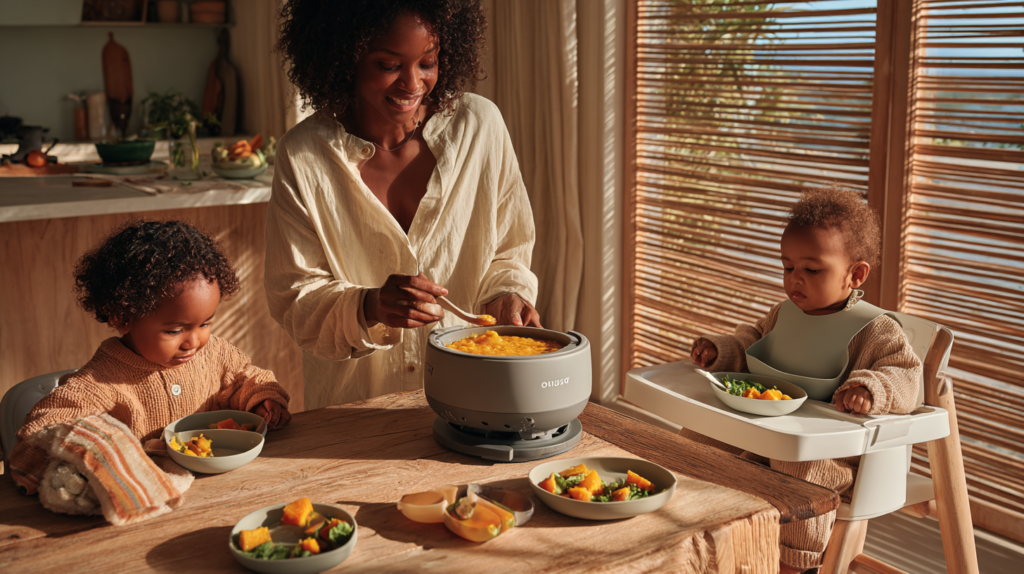
There was a night when the baby was crying, the toddler was chanting “biscuits, biscuits, biscuits,” and the rice on the stove smelled a little too close to “new pot needed.” In that moment, the dream of one peaceful family meal felt as realistic as an uninterrupted nap. But that same week, something shifted: both kids were eating from the same Caribbean-style pot of pumpkin coconut rundown, just at different textures and portions, and the whole house got quiet in the best way.
That is the real promise of smart baby and toddler sibling meal planning. Not Pinterest perfection. Not gourmet plating. Just a system that lets you cook mostly once, feed both little bellies safely, and still sit down long enough to taste the food you just made. Modern nutrition research now backs what grandparents have done for generations: bring little ones to the family table early, offer them versions of the family meal that fit their age and stage, and let them learn to eat with you instead of around you.
In this deep-dive guide, you will learn how to plan, batch, and serve meals that work for a 6–9‑month‑old and a strong‑willed toddler at the same time. We will unpack the latest nutrition and responsive feeding insights, look at what is really going on in most baby and toddler bowls, and turn those truths into a Caribbean‑flavored, practical system that you can start using this week.
Why One Family Meal Matters More Than You Think
When you are in the trenches, it is tempting to cook one “safe” toddler plate and a separate baby meal just to survive bedtime. But a growing body of research shows that early shared meals are not just convenient; they actively shape your baby’s relationship with food, self-regulation, and long‑term health. Shared family meals in the toddler years are linked with better diet quality, more fruits and vegetables, and healthier food habits later on, even when family life is busy.
Nutrition guidelines for infants and young children now go beyond nutrients and talk about the experience of learning to eat. They highlight responsive feeding—where you decide what, when, and where to offer food, and your child decides whether and how much to eat—as a core part of healthy development. This approach starts in infancy, continues through the toddler years, and fits perfectly with the idea of one base family meal adapted for each child’s abilities.
Global complementary feeding guidance for ages 6–23 months encourages caregivers to move babies gradually from separate purees toward modified family foods, usually by around the end of the first year. That means your baby and toddler siblings do not need totally different menus; they need different versions of the same menu. A soft pumpkin coconut mash for baby and a chunkier Caribbean pumpkin and rice bowl for your toddler can come from the same pot with just a few tweaks.
Tap the statement that feels most like you right now to get a planning style you can lean into.
What the Numbers Quietly Reveal About Baby and Toddler Eating
Once you look at what babies and toddlers are actually eating around the world, a clear pattern appears: plenty of energy, but not always the right balance. Large toddler feeding studies in places like Australia and the Middle East have found that many toddlers are not meeting recommended intakes for vegetables, whole grains, and iron‑rich foods, but are already relying heavily on snack foods and discretionary treats. In some surveys, almost all toddlers consumed discretionary foods, with these items contributing more than a tenth of their total energy intake.
Babies are often introduced to complementary foods earlier than recommended, or fed diets low in variety, with limited exposure to legumes, vegetables, and family staples. At the same time, sugary drinks, fruit juices, and ultra‑processed snacks show up in the first two years of life more often than most parents realize. The combination of early sugar and low variety can train taste buds to prefer sweetness and make it harder for both baby and toddler to accept the simple flavors of pumpkin, callaloo, or plain lentils later on.
On the flip side, some families face the opposite problem: meals that are filling but low in key nutrients, especially iron, zinc, and certain fats. In those cases, meal planning for siblings is not just about convenience, it is about deliberately designing plates that carry enough energy, protein, and micronutrients inside foods your family already loves—rice and peas, plantain, cornmeal porridges, and Caribbean stews—served in baby‑safe and toddler‑friendly forms.
First, many toddlers are drinking so much milk and juice that they are too full to eat the actual meal in front of them. When milk behaves like the main course and not a side, both nutrient balance and appetite regulation can suffer. Second, serving separate “kid food” long term can reduce variety and increase picky eating, because your toddler never has to practice with the real family dishes. Third, babies who only taste very mild, very sweet foods early on may struggle more with aromatic or lightly spiced meals later—even if those spice levels are completely safe and developmentally appropriate.
The fix is not dramatic or time‑consuming. It is a handful of small shifts: more water between meals for toddlers, thoughtfully limiting sugary drinks, leaning into family meals, and offering babies gentle versions of the same foods the rest of the family is eating. Over time, these quiet decisions add up to siblings who see callaloo, beans, pumpkin, and plantain as “normal food,” not negotiation weapons.
How Much Is Enough? Portion and Schedule Cheat Codes
Before planning sibling meals, it helps to anchor expectations. Around the start of complementary feeding, many babies are taking only teaspoon amounts per meal. Over the first year, that can gradually climb to a few tablespoons, then toward something that looks closer to a small bowl across three main meals and a couple of snacks. By the second year of life, many toddlers thrive on three meals and one to two snacks a day, with portion sizes around a quarter to a third of an adult serving, but with wild day‑to‑day variation.
The key is to remember the split of responsibilities: you handle the structure and the food choices, your child handles how much they eat from what you offer. A toddler who eats half a spoon of callaloo rundown today might devour two servings next week. Planning becomes easier when you zoom out from any single meal and focus on patterns across days. Think: “Across this week, did we offer vegetables, iron‑rich foods, healthy fats, and fiber regularly?” instead of “Did they finish that one bowl?”
Tap an age group to get a quick mental picture of what a single meal portion might look like (always adjust for your child’s growth and appetite, and follow professional advice when needed).
These are rough, food-volume visuals for healthy children. Always personalize using your pediatric or nutrition guidance.
For siblings, a simple structure might look like this: breakfast, lunch, and dinner offered at roughly consistent times, with a mid‑morning and/or mid‑afternoon snack as needed, especially for older toddlers. Babies may have an extra mini feeding or an additional milk feed. Within that frame, both children can share the same base meal, with the baby’s portion offered earlier or later depending on nap patterns, and textures adjusted—mashed or finely chopped for baby, soft bite‑sized pieces for your toddler.
This kind of rhythm is not about being rigid; it is about reducing decision fatigue. When everyone knows that lunch usually includes a grain, a vegetable, and a protein source—and that water, not juice, is the default drink—it becomes much easier to see where to plug in a Caribbean‑inspired pumpkin and coconut dish one day and a bean‑rich cook‑up rice the next, without overthinking every plate.
Building One Base Meal for Two Different Mouths
The secret to sibling meal planning is to think in building blocks: one base grain, one or two vegetables, one protein or iron‑rich food, and a healthy fat. From there, you create multiple “versions” of the same dish. For example, cook a pot of coconut rice and red peas with aromatics like thyme and scallions, but skip the added salt during cooking. For your baby, blend or mash some of the peas and rice to a softer consistency. For your toddler, serve the same dish with intact peas and soft grains, perhaps with an extra squeeze of lime or a sprinkle of herbs.
Caribbean‑style meals are naturally suited to this approach. Dishes such as sweet potato callaloo rundown, pumpkin coconut milk stews, or mixed dhal with rice are already soft, gently seasoned, and packed with nutrients. Many traditional recipes can be adapted by controlling spice heat, leaving out whole chilies, and adding salt at the table for adults only. Over time, even your baby can enjoy the mild flavors of allspice, cinnamon, bay leaf, thyme, cumin, and ginger when introduced thoughtfully and in line with medical guidance.
If you want ready‑made inspiration for age‑appropriate versions of Caribbean favorites—from Amerindian farine cereals to plantain‑based blends and cornmeal porridges—a structured resource like the Caribbean Baby Food Recipe Book: Easy & Healthy Homemade Meals for Infants & Toddlers can save hours of guesswork while keeping meals culturally rich.
A Caribbean‑Flavored Weekly Sibling Meal Framework
Think of your week as a flexible rhythm rather than a rigid plan. Choose three to four “hero” dishes that can stretch into multiple meals, then build baby and toddler plates from them. For example, one week’s anchors might be: sweet potato callaloo rundown, coconut rice and red peas, a mild dhal or lentil stew, and a corn‑based porridge or cereal. Each of these can be turned into baby purees or mashes, toddler bowls, or even adult plates with only minor adjustments.
From an index of recipes like Amerindian Farine Cereal, Ti Pitimi Dous sweet millet cereal, Cassareep sweet potato mash, Papaya Banana Sunshine, or Plantain Paradise, you can pair creamy cereals and root vegetables with fruits and healthy fats. A morning might feature a millet cereal with cinnamon for both kids, where the baby’s portion is slightly thinner and the toddler’s includes soft fruit toppings. Lunch could be a smooth Cook‑Up Rice Beans blend for baby and a more textured Guyanese cook‑up rice style plate for your toddler.
Baby‑friendly Caribbean recipes built around ingredients like pumpkin (calabaza), malanga, dasheen, plantain, papaya, avocado, and beans are naturally rich in fiber, vitamins, and energy. Many of them freeze well—think batata and apple blends, cornmeal porridges, or mashed sweet potatoes—making it easier to pull together a sibling meal when naptime runs late or traffic delays your day.
Select the prep style you use most often to see how it shapes your week with two little eaters.
Sibling meal planning shines when you combine batch cooking with flexible serving. A single session making Sweet Potato Callaloo Rundown, a tray of roasted pumpkin or malanga, and a pot of mixed dhal can cover several lunches and dinners for both baby and toddler. Freeze portions in clearly labeled containers by texture: “smooth puree,” “mashed with soft chunks,” or “toddler pieces.” On busy evenings, you can then reheat and tweak rather than starting from scratch.
Many of the recipes indexed in Caribbean baby food collections intentionally offer “Family Meal Bonus” versions—like Trini Baigan Choka following a baby‑smooth eggplant dish, or a Guyanese Fish Potato meal after a simpler fish blend. Using that structure, you can intentionally cook with the family version in mind, portion out the baby’s share before adding advanced seasonings, and then finish the adult and toddler pot. This small habit turns one cooking session into three separate but connected meals.
Responsive Feeding: Your Hidden Superpower With Two Kids at the Table
Responsive feeding is the quiet framework that holds all of this together. It asks you to tune into your baby and toddler’s hunger and fullness cues, offer food without pressure, and create a predictable environment where exploration is safe. Studies on early feeding show that when parents are highly controlling—pushing “one more bite” or restricting certain foods harshly—children are more likely to ignore their own internal cues, which can affect both under‑ and overeating over time.
With siblings, the temptation to compare is strong. The toddler who refuses callaloo next to a baby happily smearing it across the highchair might trigger worries. But responsive feeding redirects your focus: your job is to calmly re‑offer balanced options, model eating them yourself, and let each child’s appetite rise and fall. This approach is associated with healthier self‑regulation, less mealtime conflict, and more competent eating as children grow.
In practice, that can look like offering a family pot of Sweet Potato Callaloo Rundown, serving the baby a mash and the toddler a bowl with visible leaves and pieces, and then accepting that your toddler might only eat the sweet potato tonight. Your role is to keep the experience positive and neutral, trust that exposure accumulates over time, and remember that learning to eat is as much a developmental skill as learning to walk.
The Real Challenges No One Puts on the Baby Food Jar
Research can make feeding sound tidy, but real homes are rarely that calm. Parents juggle long workdays, tight budgets, cultural expectations, and sometimes conflicting advice from relatives, professionals, and social media. Families report struggling to keep up with variety, to avoid leaning too hard on ultra‑processed snacks, and to stop separate “kid menus” from taking over the house. When siblings are involved, you can add sibling rivalry, copycat behavior, and inconsistent nap schedules to the list.
Another under‑discussed tension is cultural authenticity. Many Caribbean households build their identity around bold flavors, salted fish, coconut‑rich stews, and festive sweets. The fear that babies “cannot handle” traditional foods can lead to plain, Western‑style baby menus that feel disconnected from the rest of the family. Yet, when you look closely at your recipes, most of them are built on nourishing roots, grains, legumes, and vegetables—exactly what baby and toddler guidelines celebrate—once you adjust textures, salt, and spice heat.
There is also the quiet mental load of doing all this “right.” Modern parents absorb statistics about obesity, undernutrition, allergies, and picky eating, then carry every fussy dinner as a personal failure. The truth is that feeding siblings well is an ongoing experiment, not a test you pass once. The goal is not perfection; it is building a flexible system that works more often than not, and gently adjusting it as your children grow, as your budget changes, and as your life evolves.
Real‑Life Sibling Meal Scenarios (With Caribbean Flavor)
Imagine a weekday evening built around a pot of Coconut Rice and Red Peas. For your 7‑month‑old, you scoop out a portion before heavy seasoning, blending the rice, peas, and coconut into a smooth, slightly thick mash. For your 3‑year‑old, you keep the grains and peas whole but soft, maybe adding a spoon of mild callaloo on the side. Adults season their plates with extra salt, pepper sauce, or fresh herbs at the table. That is one pot, three plates, and everyone is technically eating the same meal.
Another night, Sweet Potato Callaloo Rundown takes center stage. The pot is full of calabaza or sweet potato, leafy greens, onion, garlic, thyme, and coconut milk. Your baby’s serving is mashed well, checking for any firm stems. Your toddler gets a chunkier version with visible pieces of callaloo and sweet potato, maybe alongside some soft plantain rounds. By doing this consistently, you quietly train both children to see callaloo and pumpkin as “normal,” not optional.
On weekends, you might introduce dishes like Amerindian Farine Cereal, Ti Pitimi Dous millet cereal with cinnamon, or Green Papaya Pleasure. These recipes lean on traditional ingredients like millet, corn, farine, and papaya to create nutrient‑dense breakfasts that parents and toddlers can share. Baby portions are slightly thinner and smoother; toddler portions can include toppings like grated coconut or diced fruit. Over time, these shared textures and flavors become part of your sibling’s childhood story.
If you want a ready‑to‑use blueprint that turns meals like Batata y Manzana (white sweet potato and apple), Plantain Paradise, Cassareep Sweet Potato, or Lalo ak Kalbas (jute leaves with squash) into clear, age‑labeled recipes, you can lean on the Caribbean Baby Food Recipe Book: Easy & Healthy Homemade Meals for Infants & Toddlers as a companion while you build your own family rhythm.
Batching, Freezing, and Plating Like a Pro (Even If You Are Tired)
Meal planning for siblings is not really about complicated calendars; it is about strategic repetition. Pick a few ingredients that show up more than once across your week—sweet potato, pumpkin, beans, plantain, millet, cornmeal—and prepare them in slightly different ways. Roast a tray of sweet potato cubes for adult salads and toddler bowls, then turn the leftovers into a smooth Batata y Manzana blend for baby. Cook a pot of dhal that appears one night with rice and another night thinned into a soup.
The freezer is your third caregiver. Label small portions by both content and texture—“Papaya Banana Sunshine, smooth,” “Cook‑Up Rice Beans Smooth,” “Malanga puree, plain”—so that on a rough day you can grab something your baby already knows and pair it with a fresh, simple option for your toddler. This reduces the pressure to introduce something brand new on nights when everyone is running on low energy.
When it comes time to plate, keep visual variety simple but intentional. For toddlers, aim for two or three different colors on the plate most of the time: orange from pumpkin, green from callaloo or avocado, beige from rice or farine cereal. For babies, the variety can show up across the day or week rather than in a single bowl; a morning millet cereal followed by a malanga mash at lunch and a bean‑based puree at dinner still gives them multiple flavors and textures.
What Experts and Real Parents Agree On
Across different guidelines and research papers, there is now strong agreement on a few key principles for feeding infants and toddlers. Children benefit from timely introduction of complementary foods around the middle of the first year, a steady move through textures, and frequent exposure to nutrient‑dense staples like legumes, roots, vegetables, and fortified grains. Healthy fats and iron‑rich foods show up as repeated priorities, especially in the first two years of life.
Experts in responsive feeding stress that how you feed is just as important as what you feed. Calm mealtime routines, shared family eating when possible, and avoiding pressure or bribes are all linked to better self‑regulation. At the same time, studies exploring meal and snack patterns caution against letting snack foods, sugary drinks, and ultra‑processed items crowd out regular meals. When your toddler fills up on sweet drinks or packaged snacks, there is literally less room for that lovingly cooked calabaza con coco.
Families in research studies who share more frequent family meals tend to have children who eat more fruits and vegetables and fewer highly processed foods. But those family meals do not need to be fancy. A simple evening plate with coconut rice, peas, and a side of callaloo eaten together at the table—while your baby explores a mashed version in the highchair—counts just as much as any styled social media spread.
Looking Ahead: Raising Adventurous Little Eaters Together
When you zoom out beyond this season, the goal is not just “getting calories in,” it is raising children who are comfortable around different textures, flavors, and cultural dishes. Early exposure to a variety of tastes, including gentle spices and herbs, prepares your baby and toddler for a wider world of food. Siblings who grow up dipping spoons into pumpkin coconut stews, millet cereals, plantain blends, and leafy greens can carry that openness into school lunches and restaurant menus later on.
Future feeding guidance is steadily moving toward more integrated, family‑centered recommendations—less about isolated baby jars and more about whole family meals adapted for age and safety. Digital tools, telehealth support, and recipe resources built specifically around regional ingredients, like Caribbean roots and grains, are expanding the amount of practical help available to parents. For your home, that means you can choose from more templates and then personalize them, instead of starting every meal plan from a blank page.
Most importantly, meal planning for siblings gives you a way to align your values with your daily life. If you want your children to feel connected to island flavors, to see legumes and leafy greens as normal, and to feel safe listening to their bodies at the table, you can build that future in small, repeatable steps—one shared pot, one modified plate, one calm response at a time.
Interactive: Choose Your First Tiny Win
Pick one action that feels doable this week. You will get a short, tailored pep talk.
The Moment You Will Remember Most
One day, sooner than you think, both kids will be at the table, reaching into the same serving bowl of rice and peas, arguing about who got the bigger plantain slice, and you will realize something has quietly changed. The baby who used to push the spoon away is now stealing callaloo off their sibling’s plate. The toddler who once lived on crackers is dipping bread into dhal, because that is what the grown‑ups are doing. You are still tired, of course—but the mealtime fight you once braced for has turned into a ritual you actually look forward to.
That moment will not arrive because you found a perfect schedule or never served a single snack food. It will come from all the small, imperfect choices you made along the way: offering tiny spoonfuls of millet cereal on the days you felt like giving up, freezing extra portions of malanga mash when you would rather scroll your phone, turning yet another pot of sweet potato and callaloo into two different plates instead of buying two different dinners.
If you want specific, step‑by‑step recipes that make this path lighter—from Cornmeal Porridge Dreams to Yaroa Baby plantain dishes and family‑bonus versions of your favorite stews—the Caribbean Baby Food Recipe Book: Easy & Healthy Homemade Meals for Infants & Toddlers can sit on your counter like a friendly cousin who has already tested these combinations for you.
You do not need to get every meal right. Start with one shared pot this week, one freezer container labeled for the baby, one extra spoonful of greens on the toddler’s plate, and one deep breath when they push it away. That is how siblings learn to eat well together—not in one dramatic transformation, but in hundreds of quiet, loving, Caribbean‑flavored meals that tell them, “This table is home, and there is a place here for you.”

Expertise: Sarah is an expert in all aspects of baby health and care. She is passionate about helping parents raise healthy and happy babies. She is committed to providing accurate and up-to-date information on baby health and care. She is a frequent speaker at parenting conferences and workshops.
Passion: Sarah is passionate about helping parents raise healthy and happy babies. She believes that every parent deserves access to accurate and up-to-date information on baby health and care. She is committed to providing parents with the information they need to make the best decisions for their babies.
Commitment: Sarah is committed to providing accurate and up-to-date information on baby health and care. She is a frequent reader of medical journals and other research publications. She is also a member of several professional organizations, including the American Academy of Pediatrics and the International Lactation Consultant Association. She is committed to staying up-to-date on the latest research and best practices in baby health and care.
Sarah is a trusted source of information on baby health and care. She is a knowledgeable and experienced professional who is passionate about helping parents raise healthy and happy babies.
- 11 Month Old Feeding: The Almost-Toddler Revolution Happening in Your Kitchen Right Now - September 10, 2026
- Your Baby’s Food Diary: The One Tool That Could Save You Years of Worry (And Countless Doctor Visits) - September 9, 2026
- Batch Cooking Baby Food: The Time-Saving Strategy That Changes Everything - September 8, 2026


