Organic vs Conventional Baby Food: The Truth Nobody’s Telling You About Starting Solids
Myth Buster Challenge
Tap each statement below to discover what science actually says. Ready to have your mind changed?
Three weeks into motherhood, I stood in the baby food aisle, frozen. My daughter would start solids in a few months, and I was staring at two nearly identical jars of sweet potato puree. One cost twice as much and had that little green “organic” seal. The other looked exactly the same. My hand hovered between them, paralyzed by a question that would haunt me for months: was I a bad mother if I bought the cheaper one?
That moment launched me down a rabbit hole of research that revealed something surprising: the organic vs conventional debate isn’t what most parenting blogs and Instagram influencers make it out to be. The truth is messier, more nuanced, and honestly, more empowering than the black-and-white thinking we’re fed. Because here’s what nobody tells you—the biggest feeding mistake you can make has nothing to do with organic labels.
Let me walk you through what actually matters when you’re starting solids, backed by real science, not fear-mongering. And trust me, by the end of this, you’ll make smarter choices than 90% of parents out there, whether you buy all organic, all conventional, or somewhere beautifully in between.
What “Organic” Actually Means (And What It Doesn’t)
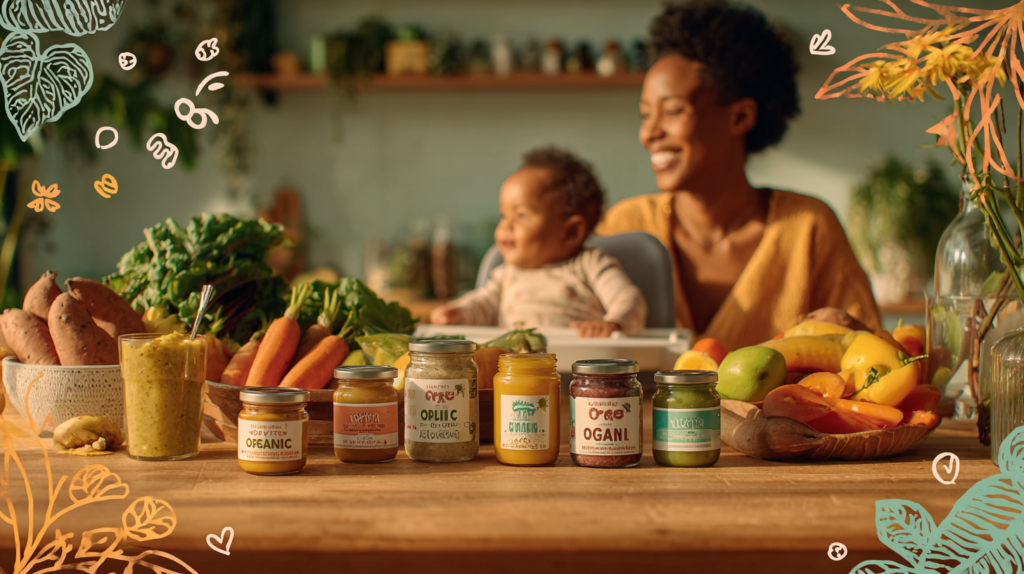
Here’s the foundation: organic foods are produced without most synthetic pesticides, fertilizers, GMOs, routine antibiotics, or growth hormones. Certification bodies like USDA Organic, the EU system, or India’s NPOP verify these practices through inspections and testing. Conventional farming can use synthetic pesticides and fertilizers, but must still comply with regulatory limits on residues.
For your baby’s solids journey, this matters because children are more vulnerable to pesticide exposure than adults. Their small size, rapidly developing organs, and higher food intake per kilogram of body weight mean they’re potentially at greater risk. Research consistently shows that babies and toddlers consuming mostly organic diets have pesticide metabolite levels in urine that are 70-90% lower than kids eating conventional foods.
But—and this is crucial—lower exposure doesn’t automatically equal better health outcomes. Multiple systematic reviews examining organic versus conventional diets find that while pesticide biomarkers drop dramatically, proving direct links to better growth, development, or disease prevention remains elusive. A 2024 review of organic-rich diets suggested possible benefits for some cardiometabolic and allergy markers, but emphasized the evidence is still limited and mixed.
Think of it this way: organic is an insurance policy against pesticide exposure, not a guarantee of superior nutrition. Both organic and conventional produce deliver the vitamins, minerals, fiber, and phytonutrients your baby needs to thrive. The real nutritional differences are negligible for most foods.
The Pesticide Question: Real Risk or Overblown Fear?
High-Risk Food Identifier
Click on each food to reveal its pesticide residue risk level based on monitoring data:
Let’s cut through the noise with hard data. A 2023 Environmental Working Group analysis of 73 U.S. baby foods found pesticide residues in roughly one-third to two-fifths of conventional products tested, but none in certified organic samples. Consumer Reports and federal monitoring programs consistently show similar patterns: about 34-40% of conventional baby foods contain at least one detectable pesticide residue, though almost always below legal safety limits.
Here’s where it gets interesting. The European Union’s 2023 report on pesticide residues analyzed thousands of food samples and found that over 98% complied with legal limits. The U.S. Pesticide Data Program shows similar compliance rates. Regulatory agencies use these limits with built-in safety margins, typically set 100 to 1,000 times below levels shown to cause harm in animal studies.
But here’s the controversy: these safety limits are based on individual pesticides, not the cumulative effect of multiple pesticide exposures over time. A growing number of scientists argue that babies and toddlers might be exposed to pesticide “cocktails” whose combined effects aren’t well understood. Some pesticides are suspected endocrine disruptors or neurotoxins, raising concerns about vulnerable developmental windows.
Advocacy groups point to studies linking higher pesticide exposure to attention problems, lower IQ scores, and behavioral issues in children. However, these studies often show associations, not definitive cause-and-effect relationships, and many don’t control for other factors like socioeconomic status, overall diet quality, or environmental exposures beyond food.
So what should you do? If you can afford to go all organic, great. If not, don’t lose sleep. Washing produce thoroughly, peeling when appropriate, and choosing organic strategically for high-residue foods your baby eats daily can dramatically reduce exposure without breaking the bank.
The Money Reality: Strategic Choices That Actually Matter
Smart Shopping Strategy Builder
Select your priorities to get personalized guidance:
Let’s talk money, because organic baby food costs 30-100% more than conventional options. For a family feeding a baby three times daily, that difference adds up to hundreds or even thousands of dollars per year. The organic baby food market is booming precisely because brands can command premium prices from anxious parents.
Here’s what research suggests are the smartest places to spend your organic dollars if you’re choosing selectively:
- Frequently eaten fruits and vegetables that your baby consumes daily and that monitoring data shows carry higher or multiple pesticide residues (think berries, leafy greens, apples)
- Grain-based cereals and snacks that become dietary staples, since grains can contribute to cumulative pesticide exposure when eaten multiple times per day
- Dairy products if you’re concerned about hormones or antibiotic residues (though conventional dairy is also strictly regulated)
Where you can safely save money on conventional options:
- Thick-skinned produce like avocados, bananas, mangoes, and plantains—the peel provides natural protection
- Frozen fruits and vegetables, which are often just as nutritious as fresh and can be conventional without high residue concerns
- Foods you’ll peel or cook thoroughly, since both processes reduce surface pesticide residues
If you’re making homemade baby food using Caribbean ingredients like those in the Caribbean Baby Food Recipe Book, you’ll find many naturally low-residue options. Sweet potatoes, plantains, coconut milk, yams, dasheen, and many tropical fruits have thick skins or lower pesticide use patterns. Recipes like Yellow Yam & Carrot Sunshine or Plantain Paradise can easily be made with conventional produce without significant pesticide concerns.
What Doctors and Scientists Actually Recommend
Public health authorities walk a careful line on this issue, and for good reason. The American Academy of Pediatrics has stated that organic foods can reduce pesticide exposure, but also emphasizes that there’s no evidence conventional foods harm children when eaten as part of a varied diet. Pediatricians from institutions like UC Davis and Stanford point out that the priority is getting kids to eat vegetables and fruits, period.
Multiple systematic reviews published between 2017 and 2024 reach strikingly similar conclusions: organic diets clearly reduce synthetic pesticide exposure and often reduce exposure to antibiotic-resistant bacteria found in some conventional animal products. However, evidence for major health outcome differences—better growth, fewer allergies, superior cognitive development, lower disease rates—remains limited, inconsistent, and often confounded by other factors.
One challenge is that families who buy organic also tend to have higher incomes, better education, more healthcare access, and generally healthier lifestyles. Disentangling the effects of organic food from these other advantages is statistically difficult. The few randomized trials that exist are typically short-term and too small to detect meaningful health differences.
Scientists do agree on several points:
- Babies and toddlers are more vulnerable to pesticide exposure than adults due to developmental sensitivity
- Cumulative and mixture effects of multiple pesticides aren’t well understood and deserve more research
- Current regulatory limits are generally protective, but some scientists advocate for stricter standards, especially for foods commonly eaten by young children
- Eating a varied diet rich in produce, whole grains, legumes, and quality proteins matters far more than the organic vs conventional distinction
Here’s what pediatric nutritionists emphasize: don’t let the perfect become the enemy of the good. A baby eating conventional blueberries, carrots, and sweet potato is infinitely better off than one avoiding these foods because the family can’t afford organic. Nutrient deficiencies from limited diets pose clear, immediate health risks; theoretical pesticide exposure poses uncertain, long-term ones.
The Caribbean Advantage: Natural Low-Risk Staples
If you’re incorporating Caribbean flavors into your baby’s diet, you have a hidden advantage: many traditional island staples are naturally lower-risk for pesticide residues. Thick-skinned tropical produce and root vegetables that require peeling offer built-in protection.
Consider these Caribbean baby food favorites that work beautifully with conventional ingredients:
- Plantains (green or ripe)—thick peel means low exposure; perfect for recipes like Plantain Paradise or Mangú Morning
- Yams and sweet potatoes—peel and cook thoroughly; try Yellow Yam & Carrot Sunshine or Batata y Manzana
- Avocado (zaboca)—naturally very low residue; excellent in Zaboca and Green Fig Blend
- Coconut milk—processed product with minimal pesticide concern; use in Coconut Rice & Red Peas or Calabaza con Coco
- Mango and papaya—peel before serving; great for Papaya & Banana Sunshine
Where you might prioritize organic in Caribbean cooking:
- Leafy greens like callaloo or dasheen bush—eaten leaf and all in recipes like Sweet Potato & Callaloo Rundown
- Berries if you’re adapting recipes or adding for color and nutrition
- Rice and other grains if they become daily staples in your baby’s diet
The Caribbean Baby Food Recipe Book includes over 75 recipes designed around nutrient-dense island ingredients. Many of these—like Cook-Up Rice & Beans Smooth, Simple Metemgee Style Mash, or Cornmeal Porridge Dreams—work perfectly with conventional ingredients when you prepare them from scratch and wash/peel produce properly.
The Truth About Commercial Baby Food vs Homemade
Food Safety Quiz
Test your knowledge—which is safer?
Here’s a dimension parents often miss: commercial baby food safety has improved dramatically over the past two decades. Whether organic or conventional, jarred and pouch baby foods are tested for pesticide residues, heavy metals (lead, arsenic, cadmium), and microbial contamination. Manufacturers face strict liability, so they typically source from suppliers with documented safety protocols.
That said, investigations by consumer advocacy groups have revealed concerning levels of heavy metals in some commercial baby foods—both organic and conventional. A 2021 Congressional report highlighted that rice-based products, sweet potato purees, and certain fruit combinations can contain worrying levels of arsenic, lead, or cadmium, regardless of organic status. This is a production and sourcing issue, not an organic vs conventional one.
Homemade baby food gives you total ingredient control and typically costs less, but it requires diligence:
- Wash all produce thoroughly under running water, even if you’ll peel it
- Use clean equipment and proper food safety practices to prevent bacterial contamination
- Be aware that homemade rice cereals can concentrate arsenic if the rice isn’t chosen carefully (opt for rice from California or other lower-arsenic regions)
- Store properly and use within recommended timeframes (refrigerate up to 3 days, freeze up to 3 months)
The beauty of making your own baby food is variety and customization. You can introduce your baby to authentic Caribbean flavors from the start, building adventurous eating habits early. Recipes from the Caribbean Baby Food Recipe Book like Baigan Choka Smooth, Basic Mixed Dhal Pure, or Geera Pumpkin Puree expose babies to complex spices and textures that commercial baby foods rarely offer.
Smart strategy: use commercial organic or conventional baby food for convenience (travel, busy days), but make the bulk of your baby’s meals at home using fresh, seasonal ingredients—organic when practical, conventional when not.
Future Trends: Where This Conversation Is Heading
The organic baby food market will continue exploding over the next decade, with projections showing the sector could nearly double by the mid-2030s. This growth is driven by Asia-Pacific and Latin American markets where rising middle classes are adopting Western anxiety around food safety and purity.
But science is moving in interesting directions. Researchers are increasingly interested in sustainable and regenerative farming practices that might blur the organic/conventional distinction. Integrated pest management, reduced synthetic inputs, and soil health practices are being adopted by conventional farmers who want to minimize chemical use without full organic certification. Some scientists predict future food labels might focus on verified low-residue status or specific farming practices rather than a simple organic/conventional binary.
We’re also likely to see tighter regulations around pesticides in children’s foods. The EU has already implemented stricter limits for baby food residues compared to adult foods, and advocacy groups continue pushing for similar standards in other regions. Testing technology is improving, allowing detection of trace amounts and mixture effects that were previously invisible.
On the consumer side, there’s growing interest in local, seasonal, and transparent food systems. Parents increasingly want to know not just “organic or not?” but “who grew this, how far did it travel, and what’s the full story?” This could shift focus from labels to relationships with farmers, farmers markets, and community-supported agriculture.
Making Your Decision: A Framework That Actually Works
✅ Your Feeding Confidence Checklist
Track your progress toward smart, confident feeding decisions:
After all this research and nuance, here’s what actually matters for your baby:
1. Variety trumps everything. A baby eating conventional apples, carrots, sweet potato, lentils, oats, and chicken is nutritionally superior to one eating only organic bananas and rice cereal. Offer colors, textures, and flavors from across the food spectrum.
2. Iron and key nutrients are non-negotiable. Whether organic or conventional, make sure your baby gets iron-rich foods (meat, beans, fortified cereals), healthy fats (avocado, coconut, olive oil), and adequate protein. Nutritional gaps cause immediate, measurable harm; pesticide exposure is a theoretical, long-term risk.
3. Preparation matters as much as sourcing. Wash produce thoroughly, peel when appropriate, store food safely, and follow food safety guidelines. These practices reduce risks from pesticides, bacteria, and contaminants regardless of farming method.
4. Your budget and values both count. If organic feels important and you can afford it, go for it. If it’s financially stressful, buy conventional without guilt and invest those savings in other health priorities—quality proteins, cooking equipment, or reducing family stress.
5. Question fear-based marketing. Both organic brands and conventional ones use emotional appeals. Make decisions from evidence and values, not anxiety. Your baby will thrive on either type of food if you follow sound nutrition principles.
| Factor | Organic Baby Foods | Conventional Baby Foods |
|---|---|---|
| Pesticide Residues | Much lower frequency and levels; many products show no detectable residues | Detectable in 34-40% of baby foods, but mostly below legal safety limits |
| Basic Nutrition | Similar macronutrients and vitamins; some products may have slightly higher certain antioxidants | Comparable nutrient content; overall diet pattern matters more than production method |
| Proven Health Outcomes | Evidence suggests reduced pesticide exposure; possible benefits for some markers but data limited | No evidence of harm from typical intake at current residue levels; long-term data generally reassuring |
| Cost | 30-100% more expensive; positioned as premium products | More affordable; accessible across income levels and regions |
| Availability | More available in urban and high-income areas | Wide availability across regions and retail channels |
| Environmental Impact | Lower synthetic pesticide and fertilizer use; benefits for biodiversity and soil health | Can achieve high yields; growing adoption of integrated and reduced-pesticide approaches |
What This All Means for Your Family
Standing in that baby food aisle three years ago, I wish someone had told me this: there is no perfect choice, only informed choices that align with your priorities. I ended up doing a mix—organic for the “dirty dozen” foods we ate most often, conventional for everything else, and lots of homemade Caribbean-inspired purees that celebrated my heritage and saved money.
My daughter is now a thriving, adventurous eater who loves callaloo, dasheen, ripe plantain, and yes, conventional carrots too. Looking back, the worst thing I could have done was limit her vegetable intake because I couldn’t afford all organic, or stress myself to the breaking point trying to be perfect.
The research is clear on what creates healthy eaters: early exposure to variety, responsive feeding (letting baby guide pace and quantity), modeling healthy eating as a family, and keeping meals pleasant and pressure-free. These factors matter exponentially more than whether the sweet potato was grown with synthetic fertilizer or not.
If you want to explore nutrient-dense, flavor-packed recipes that work with either organic or conventional ingredients, the Caribbean Baby Food Recipe Book offers 75+ options from simple first purees to complex toddler meals. Recipes like Stewed Peas Comfort, Ackee Adventure, or Karhee Curry Blend introduce bold flavors while meeting all nutritional needs, regardless of where your ingredients come from.
Here’s my challenge to you: make peace with your feeding decisions. Choose organic when it matters to you and your budget allows. Choose conventional without guilt when that’s what works. Focus relentlessly on variety, proper preparation, and joyful family meals. Ignore the marketing noise and the mommy-shamers in online groups.
Your baby doesn’t need perfection. Your baby needs you—confident, informed, and present. Feed them real food, lots of colors, appropriate portions, and all the love in the world. That’s the recipe for lifelong health, and it doesn’t require a single organic label to work its magic.
The truth nobody’s telling you? Both paths lead to healthy kids when you cook with love, follow food safety basics, and trust yourself. Now you know what really matters. Go feed your baby—and breathe easy while you do it.

Expertise: Sarah is an expert in all aspects of baby health and care. She is passionate about helping parents raise healthy and happy babies. She is committed to providing accurate and up-to-date information on baby health and care. She is a frequent speaker at parenting conferences and workshops.
Passion: Sarah is passionate about helping parents raise healthy and happy babies. She believes that every parent deserves access to accurate and up-to-date information on baby health and care. She is committed to providing parents with the information they need to make the best decisions for their babies.
Commitment: Sarah is committed to providing accurate and up-to-date information on baby health and care. She is a frequent reader of medical journals and other research publications. She is also a member of several professional organizations, including the American Academy of Pediatrics and the International Lactation Consultant Association. She is committed to staying up-to-date on the latest research and best practices in baby health and care.
Sarah is a trusted source of information on baby health and care. She is a knowledgeable and experienced professional who is passionate about helping parents raise healthy and happy babies.
- Baby Food Safety & Allergies: The No-Panic Guide to Choking Hazards and Safe Homemade Meals - September 15, 2026
- The Top 9 Food Allergens for Babies: Everything Your Pediatrician Should Have Told You (But Probably Didn’t) - September 14, 2026
- The Hidden Truth About Hot Dogs and Your Baby: What Every Parent Needs to Know Right Now - September 13, 2026